
Scaling Your Service Business With Targeted Digital Marketing
Unique Dynamics of Marketing Intangible Services
In September 2026, many service businesses struggle to find steady, good clients online. The digital world is busy and always changing. This makes it hard to stand out and reach ideal customers. We know it’s tough to show off services like plumbing, consulting, or landscaping. You need to build trust right away and get people to act. This is why strong digital marketing for service businesses is so important for growing in any local market. Today’s customers search for everything online, often on their phones. They want quick answers and clear proof before they pick someone.
This guide will explain why old ways of marketing often fail for service providers. It will show a new way, focusing on trust for today’s online customers. We will look at the main steps that truly work. These include making your online presence better, getting good leads, and turning them into loyal clients. You will learn how to use tools like Google Business Profile. We will cover smart paid ads and how to create content that shows you are an expert. For service businesses wanting a clear, data-driven digital marketing plan, knowing these ideas is key.
Marketing a service business presents a distinct set of challenges compared to selling a physical product. At its core, a service is intangible; it cannot be seen, touched, or tested before purchase. This inherent service intangibility creates a significant trust barrier and heightens risk perception for potential clients. When customers can’t physically inspect what they’re buying, they rely heavily on external cues to make a decision. This is where social proof, such as reviews and testimonials, becomes paramount.
For service providers, the goal isn’t just a single transaction, but fostering client retention and long-term relationships. This focus on relationship marketing means every interaction, from initial inquiry to post-service follow-up, contributes to the overall client experience and future loyalty. Repeat business often forms the bedrock of a service business’s revenue, with studies indicating that 80% of future revenue will come from just 20% of existing customers, and finding new clients can cost five times more than retaining current ones.
Why Digital Marketing for Service Businesses Requires a Trust-First Approach
Given the intangible nature of services, building trust isn’t just a nice-to-have; it’s a fundamental requirement for effective digital marketing. Our approach must prioritize establishing credibility and mitigating perceived risk. This means a relentless focus on reputation management, actively soliciting and responding to verified reviews across all platforms. A staggering 91% of consumers report that local reviews influence their perception of a brand, and 88% are more likely to use a business that replies to all of its reviews.
Social validation through case studies, testimonials, and endorsements acts as a powerful surrogate for physical inspection. We need to showcase real results and satisfied clients to demonstrate our expertise. Making founder visibility a part of your strategy, where the people behind the service are transparent and accessible, further humanizes the brand and builds connection. These elements combine to build strong brand authority, positioning your business as a reliable and expert choice in a crowded market. Businesses with a well-optimized Google Business Profile, for instance, are 2.7 times more likely to be trusted by customers.
Product Marketing vs. Service Marketing Dynamics
Understanding the fundamental differences between marketing products and services is crucial for crafting an effective digital strategy.
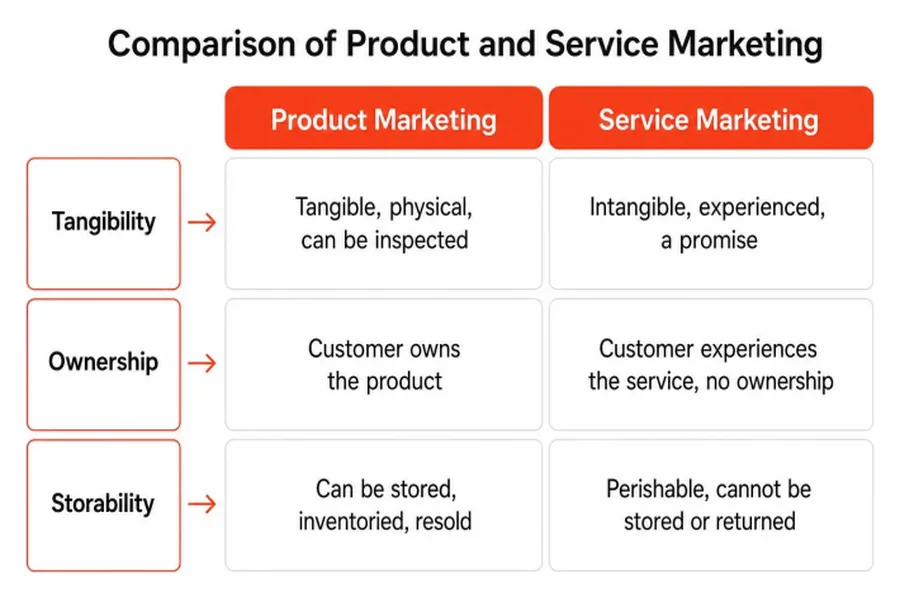
Characteristic Product Marketing Service Marketing Tangibility Tangible, physical, can be inspected Intangible, experienced, a promise Ownership Customer owns the product Customer experiences the service, no ownership Storability Can be stored, inventoried, resold Perishable, cannot be stored or returned Variability Consistent quality, mass-produced Quality can vary depending on provider, time, context Inseparability Production and consumption separate Production and consumption often simultaneous Decision Cycle Often shorter, impulse-driven Longer, more consideration, higher perceived risk Focus Features, price, benefits Trust, expertise, relationship, problem-solving Key Driver Product attributes Reputation, social proof, personal connection For service businesses, the focus shifts from transactional selling to relational selling. We aim to cultivate long-term relationships, recognizing the significant impact of customer lifetime value (CLV) on overall profitability. This often involves longer decision cycles as clients weigh options, seek recommendations, and overcome buyer apprehension associated with an intangible purchase. Our marketing must address these concerns head-on, providing reassurance and demonstrating value at every touchpoint.
Core Pillars of Digital Marketing for Service Businesses
To truly succeed in today’s digital landscape, service businesses must master several core pillars of online marketing. These strategies are designed to enhance local visibility, drive direct response, and position your brand as the go-to expert. While some tactics overlap with product marketing, their application for services is uniquely tailored to build trust and address customer needs. This holistic approach is vital for any niche-specific digital marketing strategy, ensuring your efforts are targeted and effective.
Local SEO and Google Business Profile Optimization
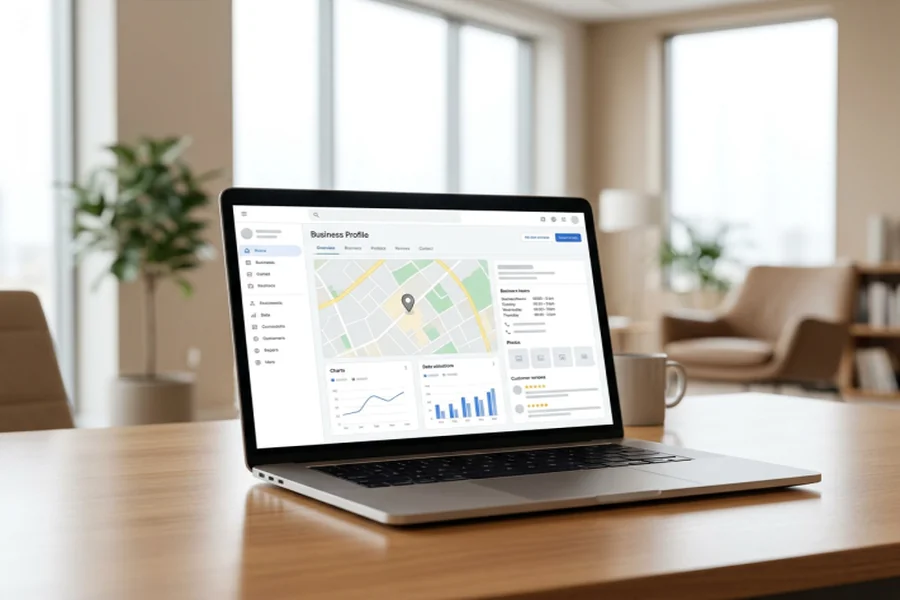
For most service businesses, especially those operating in specific geographic areas, Local SEO is non-negotiable. It ensures your business appears prominently when potential clients search for services “near me.” The cornerstone of local SEO is your Google Business Profile (GBP). This free listing acts as your digital storefront, providing critical information to searchers.
To dominate the Map Pack (the top 3 local business listings in Google search results), we must:
- Claim and fully optimize your GBP: Ensure all fields are complete, accurate, and keyword-rich.
- Maintain NAP data consistency: Your Name, Address, and Phone number must be identical across your website, GBP, and all online directories (citation consistency).
- Upload high-quality photos and videos: Showcase your work, team, and facilities.
- Regularly post updates: Share offers, news, and behind-the-scenes content.
- Actively manage reviews: Encourage new reviews and respond promptly to all feedback.
- Utilize geo-targeted pages: Create specific service pages for each city or neighborhood you serve, incorporating local landmarks and testimonials.
By meticulously optimizing your GBP, you become 2.7 times more likely to be trusted by customers, and given that 46% of all Google searches have local intent, this is where many of your future clients are looking.
High-Intent Paid Search and Local Services Ads
While organic visibility builds over time, high-intent paid search offers immediate lead generation. Google’s advertising platforms allow us to target users actively searching for your services, often in a moment of need.
- Google Local Services Ads (LSAs): These appear at the very top of Google search results, above traditional paid ads. They feature a “Google Guaranteed” or “Google Screened” badge, instantly building trust. LSAs operate on a pay-per-leadmodel, meaning you only pay when a qualified lead contacts you directly. This channel is often the highest ROI paid option for many service businesses. Qualification involves background checks, license verification, and insurance proof.
- Google Search Ads (PPC): These traditional text ads appear below LSAs. Effective PPC campaigns require meticulous keyword research, including the use of negative keywordsto prevent irrelevant clicks. We must also optimize for speed-to-lead, ensuring that inquiries are answered within minutes, as 88% of consumers searching for a local business on a mobile device call or visit within 24 hours. Robust conversion tracking is essential to measure the effectiveness of every dollar spent.
Content Authority, Video, and Zero-Click Search
The digital landscape of 2026 is increasingly dominated by zero-click search, where users find answers directly on the search results page without clicking through to a website. This shift, with over 60% of Google searches now ending without a click, necessitates a new content strategy focused on establishing content authority and optimizing for emerging formats like AI overviews.
We need to:
- Structure content for AI overviews and featured snippets: Use clear headings, answer common questions directly, and implement schema markupto help search engines understand your content.
- Create educational content: Blog posts, how-to guides, and FAQs that address client pain points and demonstrate your expertise. This positions you as a trusted advisor, not just a service provider.
- Leverage video: Video testimonialsare incredibly powerful for building trust. Informative videos, such as “how-to” guides or behind-the-scenes glimpses, can also establish expertise.
- Develop hyper-local guides: Content that speaks to specific neighborhood issues or local regulations can significantly boost your relevance for geo-targeted searches and improve answer engine optimization.
Conversion, Retention, and Automation Systems
Attracting leads is only half the battle; converting them into paying clients and retaining them for long-term value requires robust systems. This is where effective lead capture, CRM integration, dispatch software, automated follow-ups, and SMS notifications come into play, streamlining the entire customer lifecycle.
High-Converting Website Architecture for Service Leads
Your website is your 24/7 sales engine. For service businesses, it must be designed with conversion in mind, prioritizing ease of use and clear calls to action.
Key elements of a high-converting website architecture include:
- Mobile responsiveness: With 81% of consumers using smartphones for research, your site must look and function flawlessly on any device.
- Prominent click-to-call buttons: Especially on mobile, these should be easily accessible and “sticky” (remain visible as users scroll).
- Friction-free forms: Keep inquiry forms short and simple, asking only for essential information.
- Fast page speed: Websites should load in under 3 seconds; delays lead to high bounce rates.
- Above-the-fold social proof: Display testimonials, ratings, or trust badges prominently on your homepage.
- Clear service pages: Dedicated pages for each service, detailing benefits, processes, and FAQs.
Essential Tech Stack and Digital Marketing for Service Businesses in 2026
To manage and scale these marketing efforts, a streamlined tech stack is indispensable. These tools enable marketing automation, efficient review capture, and seamless communication.
Our essential digital marketing toolkit for 2026 includes:
- Website CMS: Platforms like WordPress or Webflow for easy content management.
- Analytics: Google Analytics 4 and Google Search Console for tracking website performance and user behavior.
- CRM (Customer Relationship Management): Tools like HubSpot (free tier) or Pipedrive for managing leads, customer interactions, and tracking referral sources.
- Email Marketing Software: Mailchimp or ConvertKit for building lists, segmenting audiences, and sending automated nurture sequences.
- Review Management Platform: Software that automates review requests (often via SMS) and helps monitor and respond to feedback across various platforms.
- Call Tracking: Integrating solutions that track which marketing channels generate phone calls, providing invaluable data-driven digital marketing For comprehensive, real-time analytics that integrates with various ad platforms and even dispatch software, platforms like RYNOtrax 2.0™ offer advanced CRM synchronizationand reporting capabilities.
- AI Content Tools: ChatGPT or Claude for assisting with content creation, ad copy, and drafting review responses.
Budgeting and Staged Growth for Service Operations
Effective digital marketing requires a strategic allocation of resources. Rather than a one-size-fits-all approach, we advocate for a staged allocation model that aligns marketing investments with your business’s revenue milestones and growth objectives. This ensures that every dollar spent contributes to a measurable return on investment.
Stage-Based Marketing Budget Allocation
Our research suggests a tiered approach to marketing spend:
- Early Stage (Under $1M Revenue): Focus on foundational elements.
- Google Business Profile: Full optimization and consistent management.
- Call Capture & Website: Ensure your phone is answered promptly and your website is mobile-friendly with clear calls to action.
- Google Local Services Ads (LSA): Target your most profitable services to generate immediate, high-quality leads.
- Basic Review Acquisition System: Start systematically collecting reviews.
- Scaling Stage ($1M to $3M Revenue): Expand into more organic and compounding channels.
- SEO: Begin investing in organic search engine optimization to reduce reliance on paid ads over time. This includes technical SEO, content optimization, and local link-building.
- AI SEO & Advanced Link Building: Leverage AI tools to enhance content relevance and explore strategic link-building opportunities.
- CRM & Automation: Implement a robust CRM and marketing automation for lead nurturing and customer retention.
- Enterprise Stage ($3M to $10M+ Revenue): Diversify and optimize for brand and efficiency.
- Multi-channel Diversification: Explore channels like Over-The-Top (OTT) streaming ads for brand building (once search and website conversions are stable), advanced social media advertising, and retargeting.
- Performance Websites: Invest in dynamic, data-driven website improvements that iterate based on conversion metrics.
- Dedicated Marketing Personnel: Consider in-house expertise or a more comprehensive agency partnership to manage complex campaigns.
Industry benchmarks suggest allocating 5-10% of gross revenue to marketing, with higher percentages (10-15%) for competitive markets or rapid growth phases. The key is to track your lead cost benchmarks and understand your blended CAC (Customer Acquisition Cost) across all channels.
Key Metrics and Return on Investment Tracking
To ensure your marketing efforts are yielding results, continuous tracking and analysis are imperative. We must move beyond vanity metrics and focus on those that directly impact your bottom line:
- Cost Per Acquisition (CPA): The total cost to acquire a new customer.
- Cost Per Booked Job: A more refined metric, measuring the cost to secure a confirmed service appointment.
- Inquiry-to-Booking Rate: The percentage of inquiries that convert into booked jobs, highlighting the effectiveness of your sales process.
- Referral Velocity: The rate at which new customers are acquired through referrals, indicating the strength of your client relationships and advocacy.
- Revenue Attribution: Understanding which marketing channels are contributing to actual revenue. This requires robust call tracking, form tracking, and CRM integration.
- Customer Lifetime Value (CLV): The total revenue a customer is expected to generate over their relationship with your business. This metric underscores the importance of retention strategies.
By diligently tracking these metrics, we can identify what’s working, optimize underperforming campaigns, and make informed decisions about future marketing investments.
Frequently Asked Questions About Service Marketing
Navigating the complexities of local marketing and campaign planning can raise many questions. Here, we address some common inquiries regarding digital spend benchmarks and strategy for service businesses.
How much should a service business budget for digital marketing?
The ideal marketing budget for a service business is dynamic, influenced by several factors. As a general guideline, businesses often allocate 5-10% of their annual revenue to marketing. However, this can increase to 10-15% in highly competitive markets, for new businesses aiming for rapid growth, or when expanding into new service areas. The budget should also consider your specific growth targets and how funds are distributed across different channel allocation strategies (e.g., paid ads, SEO, content). We recommend starting with a smaller, measurable investment and scaling up as you see clear returns.
How quickly do digital marketing campaigns generate qualified service leads?
The lead ramp periods vary significantly by channel:
- Local Services Ads (LSA) and Pay-Per-Click (PPC): These channels offer the fastest results, often generating qualified leads within the first week of launch. They are excellent for immediate lead volume.
- Organic SEO: This is a longer-term strategy. You can expect to see meaningful organic lead volume within 3-6 months, but establishing strong domain authority and top rankings in competitive markets typically takes 12-18 months. SEO provides a compounding asset that reduces your blended customer acquisition cost over time.
What is the most effective digital channel for local service providers?
There isn’t a single “most effective” channel; rather, a synergistic approach yields the best results. However, if we had to pinpoint the highest-impact starting points for local service providers, they would be:
- Google Business Profile (GBP): Optimizing your GBP combined with a systematic review acquisitionprocess is often the single highest-ROI starting point. Businesses with a well-optimized GBP are 2.7 times more likely to be trusted.
- Google Local Services Ads (LSA): For immediate, high-quality leads, LSAs are exceptionally effective due to their prominent placement and “Google Guaranteed” badge, operating on a pay-per-lead model.
A multi-channel synergy that integrates GBP, LSAs, targeted PPC, and SEO forms the most robust strategy for sustainable growth.
Conclusion
In the ever-evolving digital landscape of September 2026, digital marketing for service businesses is no longer an option but a necessity for sustainable growth. We’ve explored how the unique challenges of marketing intangible services demand a trust-first approach, prioritizing verified social proof and clear communication. By mastering core pillars like Local SEO, high-intent paid search, and content authority, service providers can significantly enhance their online visibility and attract high-quality leads.
The journey doesn’t end with lead generation. Implementing robust conversion, retention, and automation systems—including high-converting websites and an essential tech stack—ensures that leads are nurtured and customers are retained. Strategic budgeting, tailored to your business’s revenue milestones, allows for optimized spending and measurable ROI.
By embracing these principles, service businesses can achieve competitive differentiation, integrate their marketing with operational excellence, and build a powerful digital presence that compounds over the long term. The future of service business success lies in a thoughtful, data-driven, and trust-centric digital marketing strategy.