Commercial Carpet Cleaning Chemicals: What Actually Works on Set-In Soil
Carpet in a busy lobby looks clean for about three weeks. Then the traffic lane turns the color of weak coffee and nobody on your crew wants to admit it. I’ve watched that happen in hotels, clinics, and churches, and the cleaning chemical is usually the last thing anyone questions. It shouldn’t be.
The right product handles the soil your vacuum can’t lift. The wrong one leaves a sticky residue that pulls dirt back in faster than the building can generate it. By the end of this piece you’ll know how to read a chemical label like a tech, match the product to the soil, and avoid the four mistakes I see most often on commercial jobs.
Soil is not one problem. It’s three.
Anyone who tells you a single jug handles every commercial floor has never walked a school hallway in February. Soil comes in layers, and each one responds to different chemistry.
Dry particulate is sand, grit, and tracked-in road dust. Vacuuming handles most of it. What’s left sits at the base of the fiber and acts like sandpaper every time someone walks across it.
Oily soil is cooking grease, parking lot oil, and body oils from skin. It bonds to fiber and repels water. A detergent that can’t break that bond just pushes the stain around.
Water-based soil is spills, beverages, and anything tracked in from rain. This one’s forgiving. Most general-purpose cleaners handle it with no drama.
Here’s the mistake: crews pick one jug and use it everywhere. A restaurant needs a heavy degreaser in the kitchen transition and a mild detergent in the dining room. Treating those as the same job wastes chemical, wastes time, and wears out the carpet years early.
How do you actually read a chemical label?
Start with the dilution ratio. It’s printed on every jug in small type, and it’s the number that decides whether you’re wasting money or damaging fiber. A product at 1:64 means one part chemical to 64 parts water. Get that wrong and you either under-clean or leave residue.
Next, find the pH. Alkaline products, roughly pH 8 to 12, break down oily soil and protein stains. Acidic products, pH 2 to 6, handle mineral deposits, rust, and urine salts. Neutral products sit near pH 7 and work for routine maintenance on stain-resistant fiber.
Then check for the residue warning. Some detergents leave a film that acts like a magnet for new soil. If the label mentions a rinse step, do it. Skip that and your customer’s carpet will look dirty again in two weeks, and they’ll blame you. The EPA regulates how cleaning products are labeled for safety, so the hazard and handling sections on your jug aren’t decoration. Read them before you mix anything.
The pre-spray decision most crews get wrong
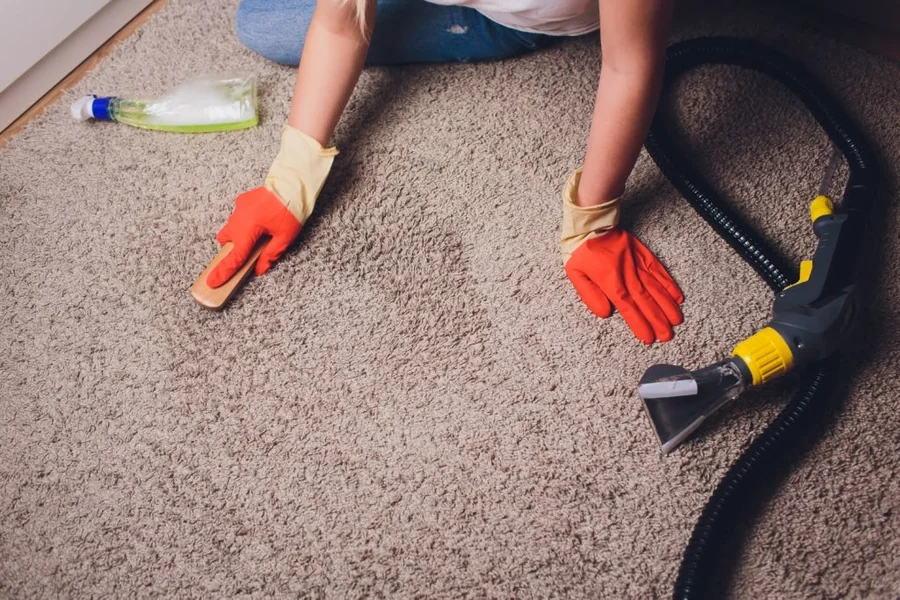
Pre-spray is where commercial cleaning gets won or lost. The chemical needs time to work. Dwell time matters more than pressure or heat, and I’d rather run a lighter mix with ten minutes of dwell than a hot mix with thirty seconds.
My rule after years of watching traffic lanes come back: dwell longer than you think, agitate less than you want. Let the chemistry do the work. A grooming brush or a counter-rotating brush helps on matted pile, but scrubbing harder on a set-in oil stain mostly just spreads it.
Temperature is a factor too. Heat speeds up most reactions, which is part of why truckmounts run hot water. But heat can also set protein stains and damage certain adhesives. Match temperature to fiber, not to habit.
The four-chemical kit that covers almost everything
You don’t need forty products in the van. A well-stocked setup for commercial work looks closer to this:
- A general-purpose alkaline detergent for routine traffic lanes on synthetic fiber
- A heavy-duty degreaser for restaurant transitions and kitchen-adjacent carpet
- An acidic product for mineral and rust issues, plus urine salt neutralization
- A spotter kit for the specific stains your buildings actually generate
Add a rinse agent if your machine supports one. Add a protectant if the customer’s willing to pay for it. But those four cover the bulk of commercial jobs I’ve seen, from hotel corridors to clinic waiting rooms.
Ordering matters here. Keeping the right jugs on the truck means the tech grabs the correct product instead of making do. Operations that run multiple buildings learn this fast. That’s part of why a supplier like Schaper’s Supply stocks the full spread of cleaning and restoration chemicals rather than a narrow list, so a crew can restock without mixing categories or running out mid-job.
Dilution math without the headache
Here’s a shortcut I use when I’m training new techs. A dilution ratio of 1:64 is roughly two ounces per gallon. 1:32 is about four ounces. 1:128 is one ounce. That’s close enough for field work and saves you from doing algebra on a loading dock.
Get a measuring cup that lives in the van. Not the one from the break room. A dedicated measure keeps dilutions honest, and honest dilutions keep costs down. Over-mixing chemical is the quiet budget killer on commercial contracts.
The mistakes that cost you the account
Over-wetting is the big one. Too much water soaks into the backing and takes forever to dry. That’s a mold risk and a complaint waiting to happen. The NASA history of moisture problems in enclosed environments is a good reminder of what happens when water has nowhere to go.
Second mistake: skipping the rinse. Leftover detergent attracts soil. You’ll be back in three weeks doing the same lane for free.
Third: ignoring fiber type. Wool, olefin, nylon, and polyester all respond differently to pH and heat. Test in a closet before you commit to a whole floor.
Fourth: no documentation. Note the product, dilution, dwell, and result on every job. When a customer calls about a spot six months later, that log is the difference between solving it and guessing.
Building a routine that holds up
Commercial carpet care is a system, not a single service call. Vacuuming frequency determines how often you need to deep clean. Pre-spray and dwell determine how well the deep clean works. Rinsing determines how long it lasts. The Library of Congress maintains preservation guidance that makes the same point about environmental control: consistency beats intensity every time.
Set a schedule by foot traffic, not by calendar. A hotel lobby needs attention far more often than a back office. Track it and adjust. Here’s what I’d do if I were running a crew tomorrow: inventory the buildings by soil type, build a two-page chemical guide for the van, train everyone on dilution, and log every job. That’s it. No new equipment required. What’s the one traffic lane in your portfolio that never seems to come clean? That’s probably where your chemical choice and your dwell time are out of sync, and it’s the best place to start testing.