Essential Tools Every Homeowner Should Own
One day or another, you will find yourself in need of doing some minor repair work or maintenance in your home. When you have the proper tools around, the job of a dripping faucet, a loose hinge or hanging a picture frame is easy. Essential tools every homeowner should own include a hammer, screwdriver set, adjustable wrench, tape measure, level, pliers & a cordless drill. Combined, they encompass most of the basic repairs, installations and quick fixes around the home. This will save your time, money and the stress of having to call a professional for small jobs.
Why Every Homeowner Needs a Basic Tool Kit
Home repair work doesn’t come with a time frame. The door to a cabinet parting just as guests are about to arrive, or the curtain rod breaking just at the right moment. With a basic toolbox on hand, you can get these issues solved in minutes, rather than “borrowing from a neighbor.”
A well-equipped tool box will save you money in the long term. It’s probably going to cost you more to hire someone to plug in a tool, than the cost of the tool. When you have the right tools, you’ll use them more than you’d think — hanging shelves, moving furniture or working on yard jobs!
There is a confidence factor, in addition to convenience. It helps to know you can fix small problems yourself, making homeownership less overwhelming. You don’t dread the next repair anymore, you look at it and say “Here is a quick repair on the list.
Must-Have Hand Tools for Everyday Repairs
Hand tools are the foundation of any home shop toolbox. They require no batteries, they last many years, and they can accomplish most of the minor tasks you will encounter.
The following are the must-haves:
- Hammer – hang pictures, assemble furniture and for minor demolition tasks
- Screwdriver set – flathead and Phillips – various sizes
- Adjustable wrench – to be used for nuts and bolts of varying sizes, rather than having multiple sets of them.
- Wire cutting or bending pliers – use to cut and bend wire
- Tape measure – a must for furniture, curtains or home made projects.
- Level – ensures that shelves, frames and hung objects are perfectly straight and level.
- Utility knife – to open boxes or to cut through drywall
All these tools are low-cost, and they can address most common issues. This is the initial group to purchase if you’re beginning.
Power Tools Worth the Investment
Hand tools are used to get the job done, but power tools are used to handle the bigger jobs and make them less exhausting. It’s not a garage full of equipment that is required — just a few key pieces are enough.
The best power tool a homeowner can own is a cordless drill. It can be used for anything from putting together furniture to hanging shelves to making pilot holes. Check for a one that has adjustable torque and has a number of different drill bits.
If you need to cut wood or other materials for smaller projects, such as custom shelving or repairs, a jigsaw will be useful. If you have a larger yard, a good hedge trimmer or leaf blower can save hours of work for outdoor maintenance, particularly.
The tools are more expensive initially, but will benefit you by helping you to begin using them regularly. Hiring equipment can quickly become an expensive proposition and owning your own equipment means you can never wait for it to be available.
Tools for Home Safety and Maintenance
There are some tools that don’t build or fix things, they keep the home and family safe. The latter are generally left up to the last minute, until an emergency arises.
Fire extinguishers – In all kitchens, grease/electrical fire extinguishers. Smoke and carbon monoxide detectors require new batteries to be tested twice a year and it is a good idea to have spare batteries available. A flash light with extra batteries is a must for power outages and a basic first aid kit should be in an easily accessible location.
Keep a shut-off wrench close to your main water shut-off, too. Water can cause significant damage if a pipe bursts; having a quick way to shut off the water flow can prevent such damage. These are not tools that you will use regularly, but when you do, there’s nothing else that can do the job.
Storage and Organization Tools
It’s not enough to just have tools; it’s vital to know where they are! It is frustrating to have to look for a screw in a cluttered garage or junk drawer.
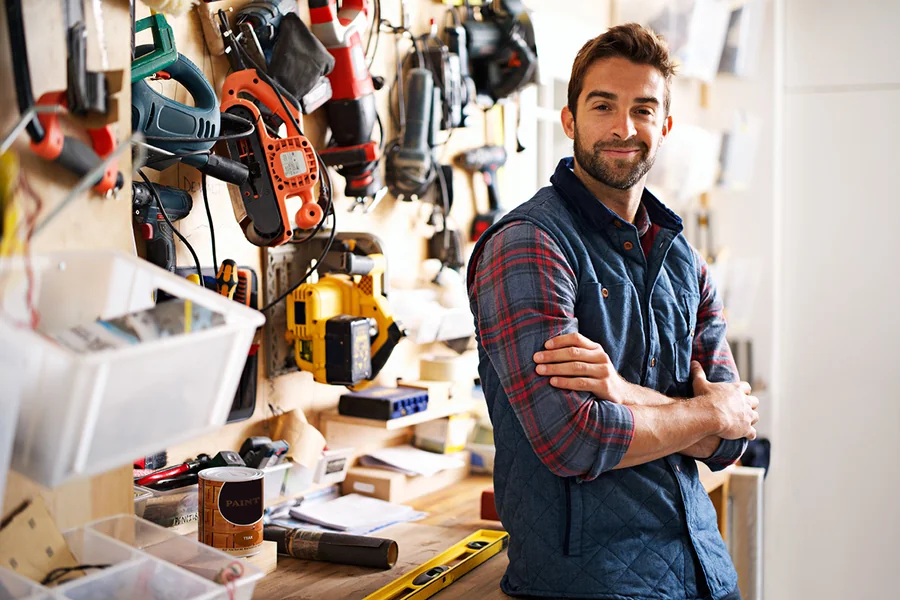
Your hand tools stay in a neat and orderly structure and are easily accessible so you can take all the tools you need to a job on one trip. For larger collections a pegboard on a garage or shed wall will allow you to see all the tools at once and get what you need in a flash.
Add also small parts organizers. A lot of screws and nails, anchors and more accumulate quickly, and it makes future projects quicker if you sort them by size. Less searching and more repair work accomplished with a little organization up front.
Budget-Friendly Tips for Building Your Toolkit
It doesn’t have to be a one-time purchase. Begin with a handful of tools — hammer, screwdriver, tape measure, and pliers — and then add tools as they are needed. This way, you are able to break up the prices and only purchase what you need.
When you first begin, search for combo kits! Numerous hand tool sets are offered by many brands at a reduced price compared to purchasing individual tools. To save money on power tools, be on the lookout for seasonal sales, particularly during big holiday sales when hardware stores tend to clear out.
Not only is there a distinction between quantity and quality, but it is important to buy quality for good reasons. Good tools will last you longer than several lower-quality tools, so if you use it often, it may be worth your while to invest a little more in a wrench or drill. Second hand tools are another option, many of the hand tools last for generations and are as functional when second hand.
Final Thought
It’s not something that can be accomplished in an instant and it doesn’t need to be. Use the basic tools first, then add on more as needed, and store all tools in an organized manner to allow for easy access when needed. Through the years, you will accumulate a library that’s capable of dealing with almost anything your home can throw your way.
The true benefit is not only in making repairs quicker, but knowing you are ready for them. Having a fully equipped toolbox makes it possible to solve minor home issues easily and without any stressful crisis.