Building a Successful Custom Apparel Business with DTF Printing
The custom apparel industry has changed dramatically over the past few years. Small businesses, online sellers, print shops, and entrepreneurs now have access to advanced printing technologies that were once available only to large production facilities. One of the biggest innovations driving this change is Direct-to-Film printing, commonly known as DTF printing.
DTF technology allows businesses to create vibrant, durable, and professional-quality garment designs with greater flexibility than many traditional decoration methods. Unlike some printing techniques that require specific fabric types or complex setup procedures, DTF printing works on a wide range of materials and supports both small and large production runs.
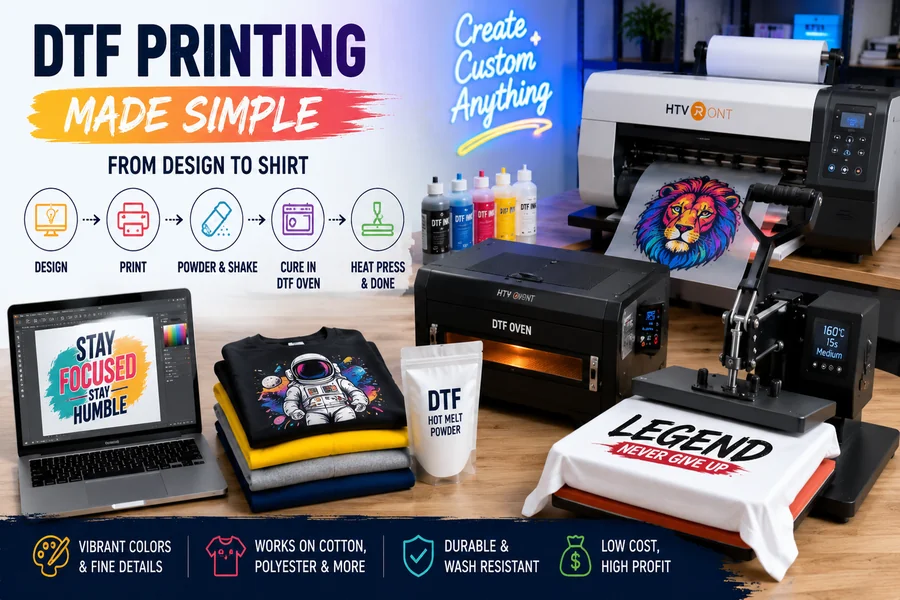
As demand for personalized clothing continues to grow, many business owners are investing in equipment such as the htvront dtf printer, a reliable heat press for shirts, and a quality DTF Oven to build efficient production workflows. These tools help create high-quality transfers while maintaining speed and consistency.
Whether you are starting a new apparel business or expanding an existing operation, understanding how DTF printing works can help you make better decisions and improve your results. This guide explores the technology, equipment, benefits, challenges, and future opportunities within the growing world of DTF apparel production.
Understanding the Basics of DTF Printing Technology
Direct-to-Film printing has become one of the most talked-about developments in garment decoration. The process allows users to print designs onto a specialized film before transferring them to fabric using heat and pressure. This approach offers a level of flexibility that appeals to both beginners and experienced professionals.
Unlike traditional screen printing, DTF does not require separate screens for each color. Instead, digital artwork is printed directly onto transfer film, making it easier to produce detailed graphics, full-color images, and small custom orders. This simplifies production while reducing setup time.
One reason DTF printing has gained popularity is its compatibility with different fabrics. Cotton, polyester, blends, and other textile materials can often be decorated successfully using DTF transfers. This versatility makes the technology attractive to businesses serving a wide variety of customers.
Another advantage is the ability to handle complex designs. Detailed artwork, gradients, photographic images, and intricate logos can be reproduced with impressive clarity. This capability allows apparel businesses to offer more creative options without significantly increasing production complexity.
Because of these benefits, DTF printing is becoming a preferred solution for many garment decorators looking to improve efficiency while maintaining professional quality.
The Role of an HTVRONT DTF Printer in Modern Apparel Production
The printer serves as the foundation of any DTF workflow. A quality printing system determines the overall image quality, color accuracy, and production efficiency of the operation. This is why many businesses carefully evaluate their printer options before making an investment.
The htvront dtf printer has gained attention among apparel decorators because it provides a practical solution for producing detailed transfer designs. It is designed to create high-resolution prints that can be applied to a wide variety of garments and promotional products.
Color consistency is one of the most important aspects of professional printing. Customers expect logos, branding elements, and artwork to appear consistent across multiple orders. A reliable DTF printer helps achieve this consistency while reducing production errors.
Production speed is another important factor. Businesses that handle multiple orders need equipment capable of maintaining quality while meeting customer deadlines. Efficient printing systems help increase output without sacrificing design accuracy.
The ability to print detailed graphics also gives businesses greater flexibility when serving clients. Whether creating custom t-shirts, sportswear, uniforms, or promotional apparel, high-quality printing equipment supports a wider range of design possibilities.
As the custom apparel market becomes more competitive, investing in dependable printing technology can help businesses deliver better products and build stronger customer relationships.
Why a DTF Oven Is Essential for Quality Transfers
After the design is printed onto transfer film, the next critical step involves curing the adhesive powder. This is where a DTF Oven becomes an important part of the production process.
The curing stage helps activate and stabilize the adhesive layer that will eventually bond the design to the garment. Without proper curing, transfers may not adhere correctly, leading to peeling, cracking, or reduced durability after washing.
A DTF Oven provides controlled heat conditions that help ensure consistent results. Unlike improvised curing methods, a dedicated oven is designed specifically for this stage of the process, improving both efficiency and reliability.
Consistency is especially important for businesses producing garments at scale. Customers expect every item to meet the same quality standards. Proper curing helps ensure that each transfer performs as intended, regardless of order size.
Durability is another major benefit. When adhesive powder is cured correctly, transfers typically withstand repeated washing and regular wear more effectively. This helps improve customer satisfaction and reduces the likelihood of complaints or product returns.
For businesses focused on producing professional-quality apparel, investing in a reliable DTF Oven can play a significant role in maintaining production standards and long-term success.
How a Heat Press for Shirts Completes the Process
Once the transfer film has been printed and cured, the final step involves applying the design to the garment. This is where a heat press for shirts becomes essential.
A heat press applies precise heat and pressure to transfer the design from the film onto the fabric. Unlike a household iron, which can produce uneven results, a professional heat press delivers consistent temperature and pressure across the entire design area.
Consistency is crucial because even minor variations can affect adhesion quality. A properly calibrated heat press helps ensure that designs bond securely to the garment while maintaining their appearance and durability.
Modern heat presses often include digital controls that allow operators to adjust temperature, pressing time, and pressure settings. These controls help accommodate different fabric types and transfer materials, making the process more versatile.
Another advantage of using a dedicated heat press for shirts is production efficiency. Operators can process garments more quickly while maintaining consistent quality standards. This becomes especially valuable during busy periods or when fulfilling large orders.
When combined with quality printing and curing equipment, a reliable heat press helps create finished products that look professional and withstand regular use.
Benefits of DTF Printing for Growing Apparel Businesses
Many entrepreneurs are choosing DTF printing because it offers several advantages over traditional decoration methods. These benefits make it an attractive option for businesses seeking flexibility and growth opportunities.
One of the biggest advantages is the ability to produce small orders economically. Traditional printing methods often require significant setup costs, making small production runs less profitable. DTF printing allows businesses to handle custom and personalized orders more efficiently.
Design flexibility is another important benefit. Businesses can create detailed graphics, full-color images, and highly customized apparel without the limitations associated with some traditional methods. This allows them to serve a broader range of customers and market segments.
The technology also supports on-demand production. Instead of maintaining large inventories, businesses can create products as orders are received. This reduces storage costs and minimizes the risk of unsold inventory.
Durability contributes to customer satisfaction as well. Properly produced DTF transfers typically maintain their appearance through multiple wash cycles, helping businesses build trust and encourage repeat purchases.
The relatively straightforward workflow also makes DTF printing accessible to newcomers. While training and practice remain important, the learning curve is often manageable for entrepreneurs entering the custom apparel industry.
These advantages have helped fuel the rapid growth of DTF technology across both small businesses and established print operations.
Common Challenges and How to Achieve Better Results
Although DTF printing offers many benefits, achieving consistent quality requires attention to detail. Understanding common challenges can help businesses avoid costly mistakes and improve production outcomes.
One common issue involves improper curing. If adhesive powder is not cured correctly, transfers may fail to bond properly during pressing. Using a dedicated DTF Oven and following manufacturer recommendations can help prevent this problem.
Temperature management is another important factor. Incorrect heat settings during pressing can affect transfer durability and appearance. Operators should always verify recommended settings for their specific materials and equipment.
Artwork quality also plays a significant role. Low-resolution graphics can produce poor results regardless of the equipment being used. Investing time in proper design preparation helps ensure sharp, professional-looking transfers.
Equipment maintenance should never be overlooked. Regular cleaning and inspection of printers, ovens, and heat presses help maintain performance and reduce the risk of unexpected downtime.
Workflow organization can further improve efficiency. Keeping materials properly stored, following consistent production procedures, and documenting successful settings help create more predictable results.
Businesses that focus on quality control throughout the process are generally better positioned to deliver reliable products and maintain customer satisfaction.
The Future of DTF Printing and Custom Apparel
The future of DTF printing appears extremely promising as consumer demand for personalized products continues to grow. Businesses across the apparel industry are embracing technologies that offer greater flexibility and faster production capabilities.
E-commerce is expected to remain a major growth driver. Online stores make it possible for apparel businesses to reach customers around the world while offering highly customized products. DTF printing aligns well with this trend because it supports short runs and personalized orders.
Advancements in printer technology are likely to improve image quality, color accuracy, and production efficiency even further. These improvements will help businesses increase productivity while maintaining high standards.
Sustainability is becoming increasingly important within the apparel industry. Manufacturers and decorators are exploring ways to reduce waste and improve environmental responsibility. Future developments in DTF materials and processes may contribute to more sustainable production methods.
Automation is another area of growth. As equipment becomes more advanced, businesses may benefit from streamlined workflows that reduce labor requirements and improve consistency.
For entrepreneurs and established companies alike, the continued evolution of DTF technology presents exciting opportunities for growth, innovation, and long-term success.
Conclusion
DTF printing has transformed the custom apparel industry by making high-quality garment decoration more accessible, flexible, and efficient. Businesses can now create vibrant, durable designs on a wide variety of fabrics while maintaining the ability to handle both small and large orders.
The htvront dtf printer serves as the foundation of the production process, delivering detailed and consistent artwork. A DTF Oven ensures proper curing of adhesive powder, helping transfers achieve maximum durability. A reliable heat press for shirts completes the workflow by securely bonding designs to garments.
Together, these tools create a powerful production system capable of meeting the growing demand for customized apparel. Whether you are launching a new business or expanding an existing operation, understanding how these technologies work together can help you improve quality, increase efficiency, and better serve your customers.
As personalization continues to shape consumer preferences, businesses that invest in quality equipment, strong production practices, and customer-focused strategies will be well positioned to thrive in the evolving custom apparel market.