What Counts as an Electrical Emergency? How to Recognize Urgent Hazards and Act Safely
Not every electrical problem is an emergency, but some require action in minutes, not days. The difference often comes down to heat, water, and arcing. A warm outlet after heavy use may be inconvenient; a sizzling receptacle with smoke is a hazard. A single tripped breaker may point to an overloaded circuit; a breaker that trips immediately after reset could signal a ground fault. This guide explains clear signs of danger, safe first steps like shutting off a circuit breaker or main disconnect, and practical ways to reduce risk. You will learn how to separate must-act-now hazards from issues that can wait until morning, without ignoring warning signs that deserve prompt attention.
-
When to Shut Power Off Immediately
Kill power right away if you see or smell burning at a device or the service panel, notice sparking or crackling from an outlet, or find water intruding near live equipment. Downed power lines, a wet breaker panel, and smoke from a receptacle or light fixture are all emergencies. Use the main disconnect if it is safe to reach while standing on a dry, nonconductive surface. If there is any active fire, evacuate and call 911 before doing anything else. Do not touch a humming or visibly damaged panel, and stay away from standing water that may be energized.
Some failures escalate quickly. For example, an overheating connection can produce arc faults that ignite nearby insulation, and a ground fault in a wet area can cause severe shock. Receptacles with scorch marks, melting around a cord cap, or a breaker that buzzes loud enough to hear across a room point to dangerous conditions. In those cases, contact a licensed emergency service, such as Forefront Electric Emergency Electrical Work, rather than attempting repeated resets or DIY repairs.
-
Issues That Are Urgent but Not 2 a.m. Emergencies
Other problems are serious but often stable overnight if you remove the load and avoid the affected circuit. A single tripped breaker after running a space heater and hair dryer together usually indicates an overloaded branch circuit. Lights that briefly dim when a large motor starts, like a well pump or air conditioner, can reflect inrush current rather than a failing panel. A warm dimmer controlling too many watts often needs a properly rated control, not a midnight teardown.
Still, patterns matter. Repeated GFCI tripping suggests a persistent ground fault, which could be moisture in an exterior box or a damaged appliance cord. Nuisance trips on an AFCI may reveal a worn cord with intermittent arcing under a sofa. Do not keep resetting a breaker that will not hold. Turn off the affected breaker, unplug or switch off connected loads, and schedule prompt service to find the root cause before it becomes an overnight emergency.
-
Safe First Actions Before an Electrician Arrives
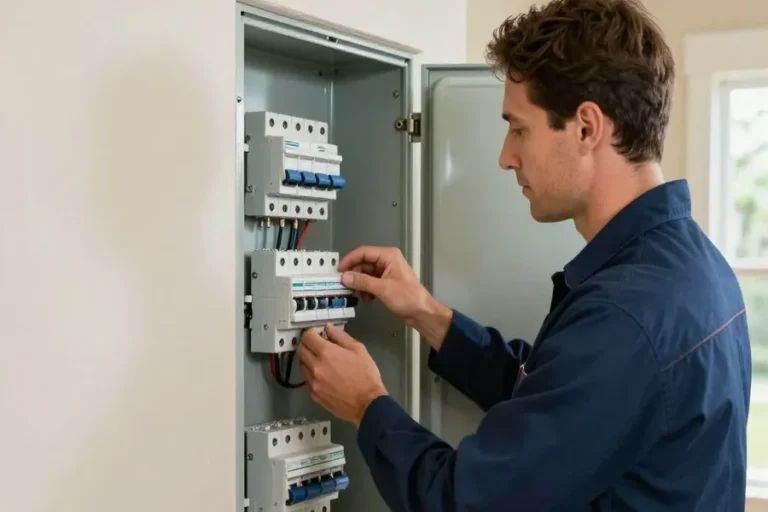
If a single circuit is misbehaving and there is no smoke or water, switch off that circuit breaker and unplug devices on that run. Labeling helps: a clearly marked panel makes it faster to isolate a problem receptacle or lighting circuit. In kitchens, press the "Test" then "Reset" buttons on a GFCI receptacle to clear a fault, but only if the receptacle and cover are dry and intact. Keep a flashlight handy, avoid metallic ladders, and never open a wet panel. A non-contact voltage tester can verify a receptacle is deenergized before you move a metal appliance away from it.
If the hazard involves the entire home, know where the main disconnect is located. Many service panels have a single handle at the top labeled "Main," while meter main combinations may sit outdoors under the electric meter. Turn off the main only if you can reach it safely without passing through water or touching damaged equipment. Remember that shutting off power has trade-offs: refrigerators warm, well pumps stop, and medical devices may lose power. When in doubt, prioritize personal safety over equipment and call a professional.
-
Two Scenarios, Step by Step
Space heater trips the breaker repeatedly on a cold night: Unplug the heater, switch the breaker fully off, then on once, and move the heater to a different dedicated circuit if available. Many 1500-watt heaters draw roughly 12.5 amps, and adding a hair dryer or vacuum can exceed a 15-amp circuit with other lights and receptacles on it. Don't daisy-chain power strips or run the heater on an extension cord. The trade-off is comfort versus risk: staying warm is important, but a cord that gets soft or a plug that smells like melting plastic is a stop-now situation.
After a storm, lights flicker across the whole house, and the panel hums: If there is no water around the panel, consider shutting off the main disconnect. Look outside for a fallen tree pulling on the service drop or a damaged masthead. If the utility lines are compromised, call the power company. Do not touch or approach a downed line. Whole-home flicker often points to a utility-side issue or a loose service neutral, which can cause overvoltage on some circuits and undervoltage on others, endangering electronics and motors. Avoid resetting breakers until you assess the underlying cause.
Reducing Risk Long Term
Prevention starts with correctly sized circuits and modern protection. Kitchens, bathrooms, garages, and outdoor receptacles should use GFCI protection, while most habitable rooms benefit from AFCI protection that detects arcing. A dedicated circuit for high-demand loads like a microwave, window AC, EV charger, or space heater reduces nuisance trips and overheated receptacles. A whole-home surge protector at the service panel can divert transient overvoltage away from sensitive electronics. If your breaker panel is aging, an electrician can evaluate whether worn bus bars, loose lugs, or outdated breakers increase risk.
Small habits matter too. Replace brittle or nicked cords; avoid running cords under rugs where heat builds; match light bulbs to a fixture's wattage rating; and keep three feet of clearance around the panel for safe access. Label each breaker clearly. If you experience intermittent trips, consider a load calculation and circuit mapping so you can isolate problem areas next time. After any urgent event, request a follow-up evaluation to verify connections are tight, terminations are torque-checked, and protective devices (AFCI/GFCI) are functioning as intended.
Electrical systems are quiet until something goes wrong. By distinguishing urgent hazards like arcing, smoke, and water intrusion from manageable issues like a one-time overload, you can act quickly without taking unnecessary risks. Use your panel's individual breakers to isolate a problem, know how to reach the main disconnect, and never touch equipment that is wet, buzzing, or charred. Plan with labeling, GFCI and AFCI protection, and dedicated circuits for heavy loads. If a situation feels unsafe, step back and call emergency services first. With a clear plan, small problems stay small and true emergencies get the fast response they require.