
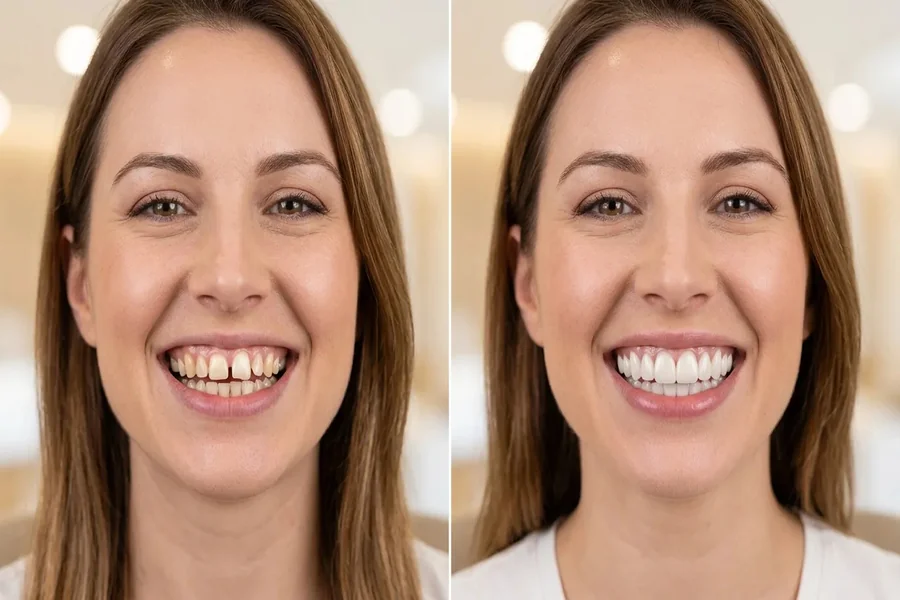
The Real Cost of a Smile Makeover: Understanding Porcelain Veneers
You saw a quote for a full smile makeover and nearly choked on your coffee. I get it. Spending thousands of dollars on something that isn’t a car, a vacation, or a down payment feels ridiculous at first glance. But here’s what most people miss: a smile makeover isn’t a luxury purchase. It’s a structural investment in how you present yourself to the world every single day.
I’ve spent years watching people agonize over this decision, and the pattern is always the same. They fixate on the price tag before they understand what they’re actually buying. So let’s fix that. We’ll walk through what veneers are, why costs vary so wildly, and how to tell whether you’re getting a fair deal or getting taken for a ride.
What Are Porcelain Veneers, Exactly?
A veneer is a thin shell, usually porcelain or composite resin, that bonds to the front of your tooth. Think of it like a phone case for your smile, except this one is permanent and custom-fitted to match your other teeth.
Dentists use them to correct chips, cracks, stubborn stains, gaps, and teeth that are slightly crooked or unevenly shaped. The appeal is simple: you get a dramatically different smile without braces or months of whitening appointments.
Porcelain and composite are not the same animal, though. Porcelain is more stain-resistant and tends to look more natural under different lighting. Composite is cheaper and can usually be applied in a single visit, but it stains faster and doesn’t last as long. If you drink coffee or red wine daily, porcelain is the smarter bet. I’d pick it every time.
Why the Price Tag Varies So Much
Here’s where people get confused. You’ll see quotes ranging from a few hundred dollars per tooth to several thousand, and it’s not because one dentist is scamming you. Several variables drive that number.
- Material quality:Lab-fabricated porcelain costs more than composite resin.
- Geographic location:Urban practices with higher overhead charge more than rural ones.
- Dentist experience:A cosmetic dentist with advanced training commands higher fees.
- Number of teeth treated:A single veneer versus a full set changes everything.
- Lab fees:Custom shading and shaping from a skilled technician isn’t cheap.
According to the American Dental Association, dental care costs in the United States have risen steadily over the past decade, driven largely by advances in materials and technology. That’s a broad trend, not a specific price you can bank on, but it explains why your grandmother’s dental bills looked nothing like yours.
The mistake I see most often is people shopping purely on price. A cheap veneer that chips in two years costs more in the long run than a well-made one that lasts fifteen. Ask about the lab the dentist uses, ask to see before-and-after photos of actual patients, and ask what happens if something goes wrong. A confident dentist will answer all three without flinching.
What Does the Procedure Actually Feel Like?
Most people worry about pain. The honest answer is that the procedure itself isn’t painful because the area gets numbed. What surprises people is the prep work.
For porcelain veneers, a dentist typically removes a thin layer of enamel from the front of each tooth. That step is permanent, which is why this isn’t a decision you reverse on a whim. Then they take impressions, send them to a lab, and fit you with temporary veneers while you wait. A week or two later, you come back and the permanent ones get bonded into place.
Composite veneers skip most of that. They’re sculpted directly onto your teeth in one sitting, usually without drilling. Faster, cheaper, and less invasive, but they don’t have the same longevity or light-reflecting quality.
After the appointment, your teeth might feel a little sensitive for a few days. Cold drinks will remind you that something changed. That fades.
A Quick Decision Framework
Before you commit, run through this checklist. It’s the same one I’d use if I were sitting in that chair.
- Define your goal.Are you fixing one chipped tooth or overhauling your entire smile? The scope determines the budget.
- Get at least two consultations.Different dentists will recommend different approaches. Compare them.
- Ask about longevity.A good porcelain veneer should last well over a decade with proper care.
- Check your insurance.Veneers are usually considered cosmetic, so don’t assume coverage.
- Look at real results.Request photos of patients with similar starting points to yours.
- Budget for maintenance.You’ll still need cleanings, and you shouldn’t bite into ice or open packages with your teeth anymore.
One more thing worth knowing: the Centers for Disease Control and Prevention notes that oral health is closely tied to overall health, which means anything you do to improve your mouth is doing double duty. That doesn’t justify spending money you don’t have, but it does reframe the purchase. You’re not buying jewelry. You’re maintaining a body part.
Common Myths That Cost People Money
Myth one: veneers are always obvious. Bad veneers are obvious. Good ones look like teeth. The difference comes down to the technician shaping them and how well the dentist matches your natural shade.
Myth two: you need a full set. Plenty of people get two or four veneers to fix specific teeth. A full set is a bigger commitment most patients don’t need.
Myth three: they’re permanent and untouchable. They’re durable, not indestructible. Treat them like real teeth and they’ll hold up. Treat them like bottle openers and you’ll be back in the chair.
If you’re considering porcelain veneers in Houston from Ingenious Dentistry or anywhere else, ask what material they recommend for your lifestyle. A dentist who asks about your coffee habit and your bite pattern is paying attention. One who jumps straight to a price is probably selling, not treating.
So Is It Worth It?
That depends entirely on what you’re hoping to get out of it and what you can comfortably afford. If you’re dealing with teeth that make you hide your smile in photos, the confidence shift after veneers is real. Patients describe it constantly. But it’s not a magic fix for self-esteem, and anyone promising you that is overselling.
What I’d tell a friend: get the consultations, understand the materials, and don’t rush. Pick a dentist who explains the trade-offs instead of just quoting a number. The American Dental Association’s consumer resource is a solid place to start reading up before you ever sit in a chair.
Your smile is with you for every meeting, every date, every photo. If you’ve been putting off the research, start this week. Book one consultation. You don’t have to commit to anything, and you’ll learn more in thirty minutes than in thirty hours of scrolling.