How Low Bridges and Power Lines Affect the Transportation of Tall Loads
A tall load can travel across two states without trouble and then get stuck five miles from its destination. The interstate was fine, the truck stayed on its permitted route, and nobody expected the old railway bridge on the access road to become a problem. The driver has a height measurement, but the clearance sign doesn’t leave enough room to proceed. Turning around isn’t easy either, particularly with a long trailer and traffic building up behind it.
These situations are difficult because height restrictions leave little room for improvisation. A driver hauling a wide machine might sometimes have several ways to negotiate a tight corner, subject to the permit and traffic controls. With a low bridge, there is no comparable adjustment. Either the combination has adequate clearance or it needs another route.
Why the Number on the Bridge Isn’t Enough
Bridge signs provide important information, although the available space can vary across the roadway. Some older structures have arched openings, with less clearance near the sides. A truck approaching in the right lane may therefore face a different restriction from one traveling closer to the center. That doesn’t mean the driver can simply change lanes to gain clearance; the permitted route and traffic conditions still matter.
Road maintenance adds another complication. A fresh layer of asphalt can reduce the distance between the pavement and the underside of a bridge. Clearance information may also need updating after construction. For unusual loads, relying on an old route survey or a photograph taken months earlier can leave the carrier working with outdated measurements.
There is also the question of how the truck moves beneath the structure. A long trailer crossing a pronounced change in road grade doesn’t stay at the same angle throughout the maneuver. The position of the cargo relative to the bridge changes as the tractor and trailer move over the crest or through the dip.
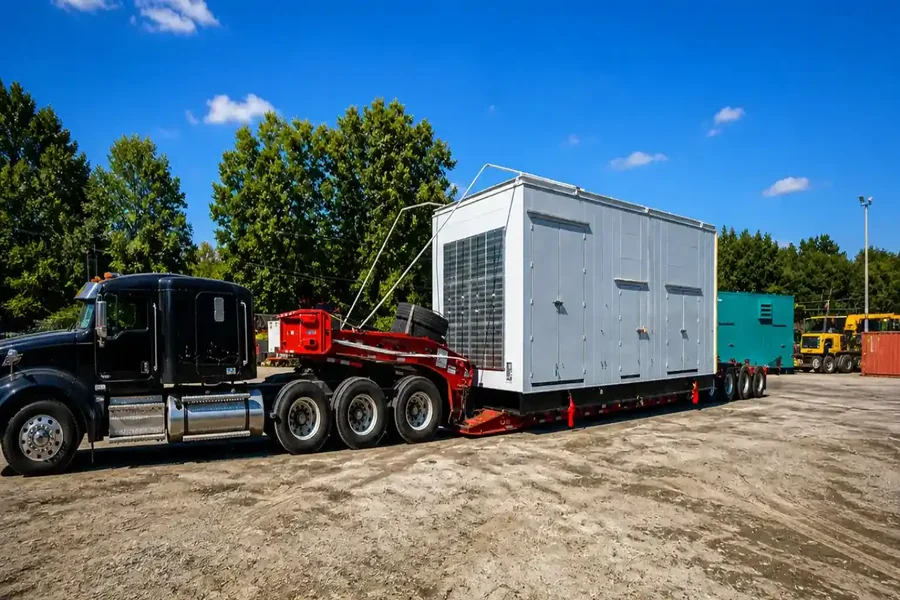
The carrier needs the actual loaded height, measured after the equipment has been secured. A machine’s published dimensions won’t include the trailer deck, shipping supports or attachments left in place for transport. If the combination exceeds the applicable legal height, an overheight permit may be necessary, along with the route review required by the relevant jurisdiction.
Power Lines Are a Different Problem
Overhead electrical cables aren’t marked like bridges. On smaller roads, there may be no sign at all, and several lines can cross at different heights. A driver looking through the windshield cannot reliably determine whether the lowest cable provides enough clearance for a tall piece of machinery.
Wires also don’t remain at exactly the same height in every condition. Temperature and electrical loading can affect sag, while the distance between poles influences where the lowest point occurs. That makes casual estimates particularly unsuitable for planning a high-load movement.
The most awkward crossings are often found on roads leading to industrial properties or construction sites. A carrier may have checked the main highway route carefully, only to discover a utility connection across the entrance to the customer’s facility. Moving the delivery to another gate may not help if the alternative approach has its own restrictions.
Electrical lines must never be lifted or moved by the driver or an unauthorized crew. Where special arrangements are required, the responsible utility provider needs to be involved. Depending on the location, that work may require coordination with road authorities and an agreed time window.
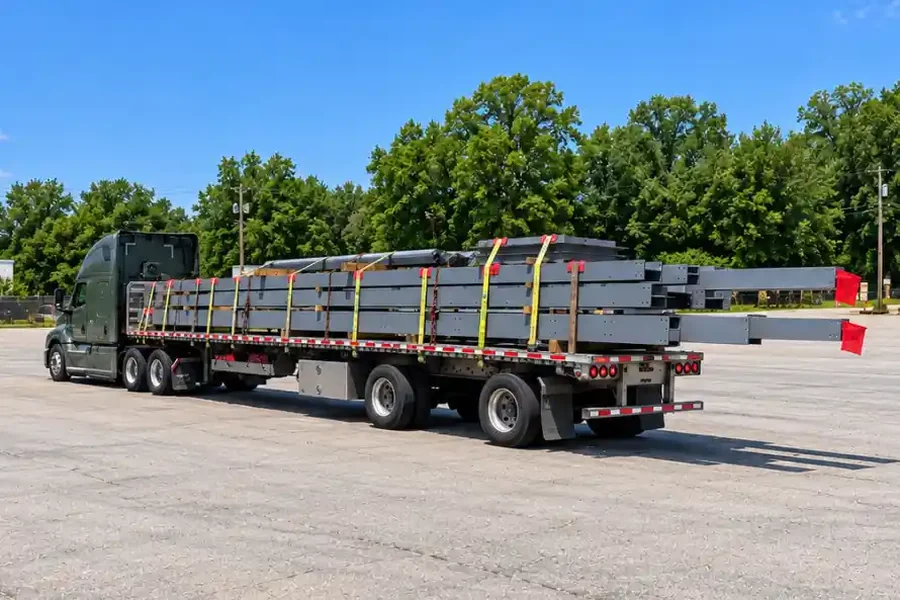
A route review should account for several details before the truck leaves:
- The complete loaded height, including transport supports.
- Bridge clearances and restrictions affecting particular lanes.
- Changes in road grade near overhead structures.
- Electrical and communication lines on local roads.
- Permit conditions and any necessary utility arrangements.
A survey can identify an obstacle, but identifying it doesn’t automatically resolve it. The carrier still needs an approved way through, whether that means using another suitable road or arranging authorized work at the crossing.
What Happens When the Route Doesn’t Work
Suppose a driver reaches an access road and discovers that the available bridge clearance is lower than expected. The first concern is finding a safe place to stop. A large combination may not fit on the shoulder, and reversing toward a busy intersection could create another hazard.
Dispatch then has to examine the alternatives. The nearest parallel road might have a weight-restricted bridge or a turn the trailer cannot negotiate. A longer route may be more practical, but it still needs to be checked against the vehicle’s dimensions and permit conditions.
A route change can also create paperwork problems. Some permits specify the roads the carrier is authorized to use, and requirements vary by state. An alternative road shouldn’t be treated as approved merely because it appears on a navigation map.
Permit assistance and information about oversize transportation are available here. For a particular shipment, however, the carrier must still confirm the applicable conditions with the issuing authorities.
A delayed delivery is frustrating, especially when the obstacle is close enough that the customer can practically see the truck. Yet the distance remaining doesn’t make a low bridge any higher or an electrical crossing less dangerous. Resolving the problem may mean waiting for revised authorization, arranging utility work or finding a suitable alternative route.