What Collectors Should Know About Picasso Estate Lithographs
A harlequin in a diamond-patterned costume can hang on a hallway wall for decades, and visitors still slow down to look. The figure belongs to a visual vocabulary that Pablo Picasso built over a lifetime. That vocabulary didn’t end when he died, because the family that inherited his work kept it moving.
That continuation continues through Marina Picasso, Pablo Picasso’s granddaughter, who inherited a significant portion of the Picasso estate and authorized limited-edition lithographs drawn from that collection.
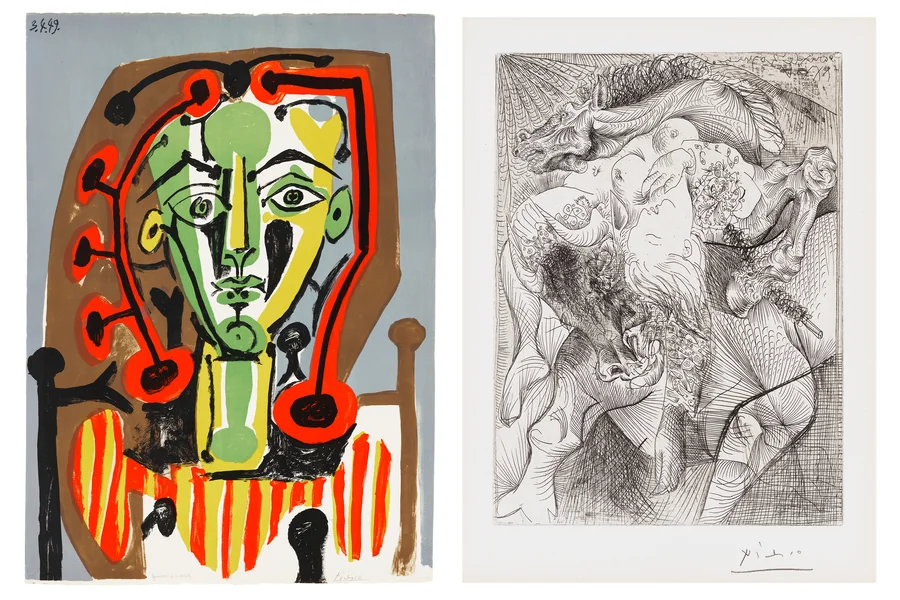
The editions, some printed on Arches paper, revisit harlequins, guitars, still lifes, minotaurs, doves, knights in armor and reclining women, with works dated between 1937 and 1982. Each piece carries edition documentation, the paperwork that records where an impression sits within its edition.
Anyone who admires Picasso has good reason to look at what came after him. Both names belong in the conversation.
Marina Inherited a Share of the Picasso Estate
Picasso left behind more than ten thousand works and no will. His granddaughter Marina, born in 1950, received a fifth of the estate, giving her something rare and a little daunting: a famous body of art and the freedom to decide its next chapter.
She chose to share it. Over the years, much of what she inherited has gone out into the world, and the proceeds have gone to children.
She Put Her Inheritance to Work for Children
Her foundation built an orphanage in Vietnam called The Village of Youth, and the same funds paid for things a village can feel right away:
- Wells for clean water
- Food for orphanages
- Hospital equipment
- Farming subsidies
- School scholarships
A drawing in a living room and a well in a village sit far apart on a map. A single legacy connects them.
Two Artists Worth Honoring Side by Side
Some collectors treat estate editions as a footnote to the master. That view misses the way a legacy actually travels. A body of work needs someone to carry it, and that person shapes how the next generation meets it.
Pablo gave the world the line, the color and the characters. Marina gave those images a path into new homes and a purpose beyond the frame. Honoring one without the other leaves the story half told.
A collector who understands both names buys more than a picture. The print arrives with a family chapter attached, and that chapter makes the harlequin on the wall a little more meaningful every time you pass it.
Harlequins, Guitars, Minotaurs and Doves in One Collection
The subjects read like a tour through Picasso’s recurring cast. Harlequins and guitars sit beside still lifes, reclining and seated women, minotaurs, doves, knights in armor, skulls, and studies of heads and faces.
Each motif carries a mood. Harlequins bring theater and a touch of melancholy, doves suggest peace, and minotaurs add a restless energy. Choosing among them feels less like shopping and more like deciding which room in your life needs a little more drama, or a little more calm.
Works that span 1937 to 1982 also let a viewer follow the same ideas across more than four decades. A few prints hung together tell a longer story than any single piece could.
Limited Edition Lithographs Bring Picasso Home
Original Picasso canvases sit at prices few private collectors will ever see. A limited-edition lithograph opens a middle door, offering a documented work that carries the motifs people love.
Arches paper adds a tactile quality that a screen cannot show. It takes ink with a soft, deep tooth, so the line looks like it rests in the sheet instead of sitting on top.
Each impression is numbered within its edition. That number is a small, satisfying detail to find in the margin.
The first moment with the sheet in hand tends to stay with a person. The paper, the line and the quiet weight of the name all arrive together.
Does a 1937 Date Mean the Print Was Made in 1937?
Some works in the collection carry dates such as 1937 and 1943, years before Marina was born. A lithograph can reproduce a composition created decades earlier, so the date usually points to the original idea.
Ask the seller which date applies and keep the answer with your paperwork. A clear reply is a good sign.
Three Questions to Ask Before You Buy
Every edition comes with edition documentation, and a few simple questions help you read it well:
- Which number is my impression, and how large is the full edition?
- Who produced the print, and in what year?
- What provenance will travel with the work?
Ask them kindly and expect friendly answers. An insurer or appraiser will ask the same questions years from now, so it helps to have them settled today.
Where to Hang a Picasso Lithograph
Paper loves soft light. A hallway, a reading corner or a dining room wall away from direct sun gives the sheet a calm home, and archival matting protects it from the slow fading that strong light brings.
Frame it with room around the image. A wide mat gives a harlequin space to breathe, and it helps the eye settle on the line.
Think about the neighbors, too. A guitar still life looks lovely above a sideboard, a dove suits a bedroom or a quiet study, and a minotaur gives a stairwell some real personality. Let the subject suit the room, and the room will reward you every day.
Keep the paperwork in a folder and a digital copy in the cloud. That small habit turns a future appraisal, a resale or a family handoff into a short conversation.
Picasso Lithographs Keep Two Names in the Room
A print from this collection holds the line, the paper and the paper trail. It also holds a story about what happened to a famous body of work after its maker was gone.
Picasso supplied the genius, and Marina supplied the stewardship that keeps his imagery moving and giving. Two names, one legacy, and a wall that deserves both.