What to Do When a Vehicle Keeps Having the Same Problem
Key Takeaways
- Document every symptom, repair visit, cost, and conversation.
- Ask the repair facility to place your exact complaint on each work order.
- Check for open safety recalls using your vehicle identification number.
- Keep warranty documents, invoices, towing receipts, and photos in one file.
- Put safety first when a recurring problem affects brakes, steering, power, overheating, or warning lights.
- Review warranty terms and state consumer options if repeated repairs do not solve the issue.
A vehicle that keeps developing the same problem can be expensive, disruptive, and difficult to explain to a repair shop. Whether you are dealing with repeated stalling, electrical trouble, transmission behavior, water leaks, or concerns similar to Chevrolet Avalanche known issues, a well-organized record can make the next repair visit more productive.
One repair does not always mean a vehicle has a serious defect. Parts wear out, and some failures are isolated. But when the same symptom returns after repairs, it may indicate an incomplete diagnosis, an intermittent condition, a related component failure, or a problem that requires more thorough attention.
Why Repeated Vehicle Problems Deserve Attention
Repeated failures should not be dismissed simply because the vehicle works normally between episodes. Intermittent problems are often the hardest to diagnose because they may appear only in certain conditions, such as cold starts, highway speeds, wet weather, heavy traffic, hard braking, turns, or towing.
Pay close attention to warning signs that affect safe operation. Loss of power, steering difficulty, brake concerns, smoke, burning odors, overheating, severe vibration, or a flashing warning light can require immediate action. If you believe the vehicle is unsafe to drive, pull over safely and arrange for a tow rather than trying to make it home.
Start With a Clear Problem Description
Before bringing the vehicle in, write down what happened without guessing at the cause. “The engine stalled twice at low speed while turning left” is more useful than “the engine is bad.” Clear observations give the technician a better starting point and create a record that is easier to compare with future visits.
- Date, time, and odometer mileage when the symptom occurred.
- Weather, road conditions, speed, and whether the engine was cold or fully warmed up.
- Warning lights, messages, sounds, smells, vibrations, or changes in handling.
- What happened immediately before and after the problem appeared?
- Photos or short videos, when safely captured by a passenger or while parked.
Build a Repair and Service File
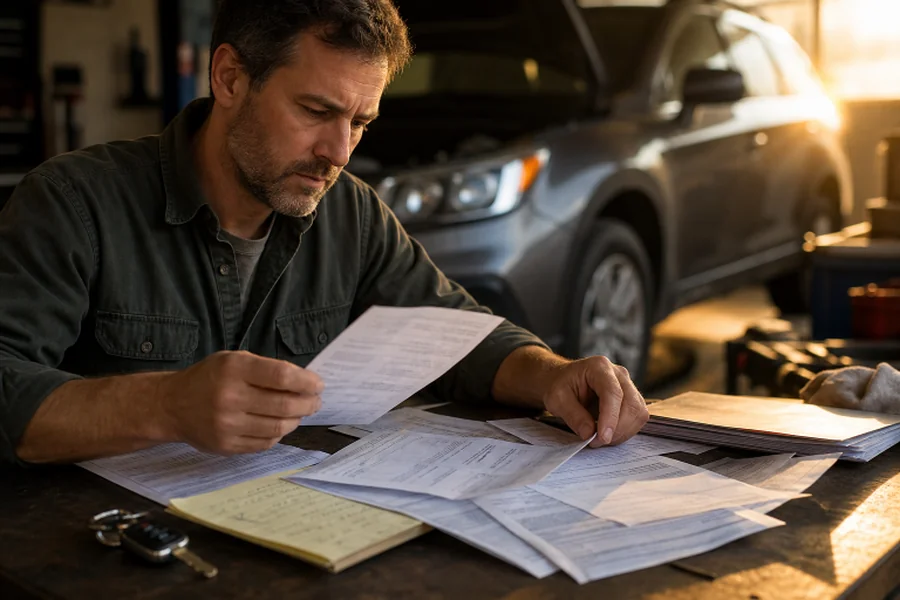
Create one paper folder and one digital folder for the vehicle. Save repair orders, invoices, diagnostic reports, estimates, parts lists, towing bills, rental-car receipts, emails, texts, and photos. Include the name of each service adviser, manager, technician, and dealership or shop involved.
Your records can be especially important during a warranty claim. The Federal Trade Commission notes that owners should keep maintenance records and warranty coverage because a warranty provider may ask for proof that the vehicle was properly maintained. Review the FTC guidance before assuming a claim will be approved or denied.
Ask for Detailed Repair Orders
Every visit should leave a clear paper trail. When you drop off the vehicle, ask the adviser to include your exact concern on the repair order. Review the description, mileage, and date before signing if possible.
- Describe the symptom and the conditions under which it happens.
- Ask that the reported complaint remain on the work order, even if the shop cannot reproduce it.
- Request that tests performed, diagnostic codes found, and parts replaced be listed.
- Ask what the technician believes caused the problem and how that conclusion was reached.
- Get a complete copy of the final invoice and repair order before leaving.
Vague language can cause trouble later. A record that says “checked vehicle” does not explain much. A record that identifies intermittent stalling, an illuminated warning light, and driving conditions provides the next technician with meaningful information.
Check for Recalls and Safety Complaints
A repeated issue may not be a recall, but it is worth checking. The federal VIN recall lookup can show unrepaired recalls associated with a specific vehicle and also provides broader recall, complaint, investigation, and manufacturer communication information by year, make, and model.
Compare the language of any recall with the symptoms you are experiencing, but do not assume a similar description guarantees that the recall applies. Contact a franchised dealer with your VIN to confirm whether an open recall repair is available. Check periodically because newly announced recalls may not immediately include every affected VIN.
Know the Difference Between a Recall, Warranty, and Service Contract
- Recall:A manufacturer campaign involving a safety-related defect or failure to meet a safety standard. The remedy may involve repair, replacement, refund, or, in rare situations, repurchase.
- Warranty:A written promise to repair certain defects or malfunctions within stated time and mileage limits.
- Service contract:An optional agreement that may pay for selected repairs under its own exclusions, deductibles, procedures, and duration.
These protections are not interchangeable. Coverage can depend on the failed component, maintenance history, vehicle age, mileage, prior repairs, and the contract language. Read the actual documents rather than relying only on a verbal summary.
Use This Plan After the Next Failure
- Protect safety first.Stop driving and seek help if the condition creates a clear safety risk.
- Capture the facts.Photograph warning messages and record mileage, location, and conditions.
- Notify the repair facility in writing.Send a concise description by email or text when available.
- Request a full diagnosis.Ask what was tested, what was found, and why the proposed repair should solve the issue.
- Save every document.Keep estimates, invoices, messages, tow bills, and rental expenses.
- Escalate when necessary.Ask for a service manager and request a manufacturer’s case number if the vehicle remains under manufacturer coverage.
- Review local options.State consumer rules vary, so consider contacting a state consumer protection office or a qualified attorney when repeated repairs remain unresolved.
What If the Shop Cannot Reproduce the Problem?
A short test drive may not trigger an intermittent failure. Ask whether the vehicle was tested under the same conditions you documented. Provide photos, videos, timestamps, and notes. Also ask whether the shop found stored, pending, or historical diagnostic trouble codes, even if no active warning light appeared during the visit.
If the problem continues, a second opinion from a qualified repair facility may be useful. Make sure that the facility receives copies of the earlier repair records, since a pattern across several visits may be more revealing than any single appointment.
When Repeated Repairs May Point to a Larger Consumer Issue
Take a closer look when the same defect returns after repair, the vehicle spends substantial time out of service, several parts are replaced without resolving the original complaint, or the issue interferes with safe driving, work, or basic transportation. Possible remedies depend on the vehicle’s age, mileage, warranty terms, repair history, purchase type, and the laws in your state.
Common Questions About Repeated Vehicle Defects
Should I drive when the same warning light returns?
It depends on the warning and how the vehicle is behaving. A brake, oil-pressure, temperature, steering, or serious powertrain warning deserves prompt attention. When in doubt, stop safely and consult a qualified professional.
What if I bought the vehicle used?
Used-vehicle coverage varies widely. Review the purchase paperwork, Buyer’s Guide, remaining manufacturer warranty, and any service contract before assuming a repair is covered.
How long should I keep repair records?
Keep them for as long as you own the vehicle. Retain them longer if there is an unresolved warranty claim, safety complaint, sale dispute, or consumer issue.
Final Checklist for Vehicle Owners
- Write down the symptom before every repair visit.
- Use exact dates and mileage readings.
- Request detailed repair paperwork.
- Check the VIN for recalls.
- Keep warranty and service contract documents together.
- Communicate in writing when possible.
- Do not ignore safety-related failures.
- Seek appropriate local guidance if repeated repairs do not resolve the problem.
Conclusion
A recurring vehicle problem is frustrating, but careful documentation gives you more control over the process. Clear notes, detailed repair orders, recall checks, and complete warranty records can show what happened, when it happened, and what was done to address it. Focus on safety, ask specific questions, and keep the facts organized so that each repair visit builds toward a clearer answer.