Why Are More People Taking a Break From Social Media Without Deleting Their Accounts?
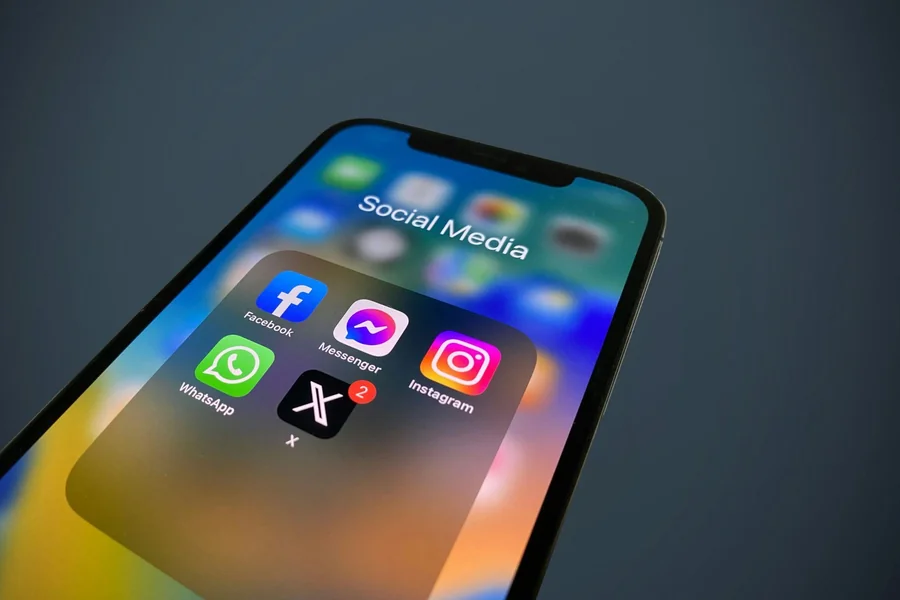
For years, leaving social media was often presented as an all-or-nothing decision. Either you remained active or deleted your account entirely. Increasingly, however, people are choosing a middle ground: removing apps from their phones, stopping posts for a few weeks, turning off notifications, or simply checking their accounts much less frequently.
That approach makes sense because many people do not actually want social media permanently removed from their lives. They still value messages, old photographs, professional contacts, groups, and connections with distant friends. What they want to change is the amount of attention the platforms receive every day.
People Want Distance Without Losing Everything They Have Built
Deleting an account can mean walking away from years of connections, conversations, photographs, saved content, and professional relationships. Taking a break preserves those things while removing the expectation that someone needs to participate every day.
There is a useful distinction between temporarily stepping away and permanently abandoning something that may still have value. Similar thinking applies when people make financial decisions: an investor using resources such as Vector Vest may examine different approaches before deciding what role a particular strategy should have rather than treating every decision as a permanent choice. Social media breaks provide comparable flexibility. Someone can change how they participate without immediately deciding that a platform can never be useful again.
That makes experimentation much easier. A person can stay away for two weeks, observe what changes, and then decide whether to return differently.
Constant Checking Can Start Feeling Like Another Responsibility
Social media was originally attractive partly because it felt optional. You opened an app when you wanted entertainment or wanted to see what friends were doing. For some users, that relationship has gradually reversed.
Notifications arrive throughout the day. Group conversations continue while you are working. Messages create an expectation of quick replies. Creators and professionals may feel pressure to post consistently, while ordinary users can feel strangely absent if they have not shared anything for months.
Eventually, maintaining an online presence can begin to resemble another task.
A temporary break interrupts that pattern without requiring a dramatic announcement or permanent departure. Removing an app from the home screen alone can create enough friction to expose how frequently it was being opened automatically rather than deliberately.
The first few days can be revealing. Someone who repeatedly reaches for an app without consciously deciding to use it may realize that checking the feed had become less of a choice and more of a reflex.
The Feed Can Become More Exhausting Than Entertaining

Social feeds rarely contain only updates from friends anymore. Depending on the platform, a few minutes of scrolling can expose someone to breaking news, advertising, political arguments, influencer content, celebrity controversies, personal achievements, tragedies, and endless recommendations selected by an algorithm.
That is a remarkable amount of emotional switching for something people may open simply because they have thirty seconds to spare.
There is also the comparison problem. Even when people understand intellectually that social media shows a selective version of other people’s lives, repeated exposure can still influence how their own lives feel. Promotions, vacations, relationships, new homes, fitness transformations, and expensive purchases can make an ordinary Tuesday look strangely inadequate.
A break removes that stream temporarily. The objective does not have to be proving that social media is harmful. It can simply provide enough distance to determine which parts of the experience someone genuinely misses and which parts they are relieved not to encounter.
Staying Connected No Longer Requires Staying Constantly Online
One reason people hesitate to delete accounts is the fear that they will become disconnected from friends or miss important information. But taking a break does not necessarily mean disappearing socially.
Close relationships can move to text messages, calls, group chats, or in-person plans. In fact, reducing passive updates can sometimes reveal which relationships actually involve direct communication.
There is a significant difference between knowing what someone did last weekend because you saw their photos and having a conversation with them about it. Social media can create a feeling of keeping up with hundreds of people without requiring much actual interaction.
Taking temporary distance can therefore change the way people communicate rather than simply reducing communication. Someone might discover that they miss certain people considerably more than they miss the platform itself.
Keeping the account means those broader connections remain available whenever they choose to return.
A Break Can Help People Decide What They Actually Want From Social Media
The most useful result of stepping away may not be deciding whether social media is good or bad. It can be discovering which parts deserve a place in everyday life.
After several weeks away, someone might decide they still enjoy seeing photographs from friends but do not want short-form video consuming an hour every evening. They may want professional networking but no longer care about posting personal updates. Another person might enjoy one platform while realizing that another contributes almost nothing they value.
Returning does not have to mean restoring every previous habit. Notifications can remain disabled. Apps can stay off the phone and be accessed only through a computer. Certain accounts can be unfollowed, posting can become less frequent, and specific times of day can remain social-media-free.
This is why temporary breaks can be more practical than dramatic account deletion. They turn the question from “Should I quit social media?” into something more useful: “What do I actually want social media to do for me?”
The answer may still be that a particular account should eventually be deleted. But for many people, the problem is not having an account. It is allowing that account to demand attention throughout the day.
Taking a break creates enough distance to separate those two things. The account remains there, but the habit no longer has to remain exactly the same.