
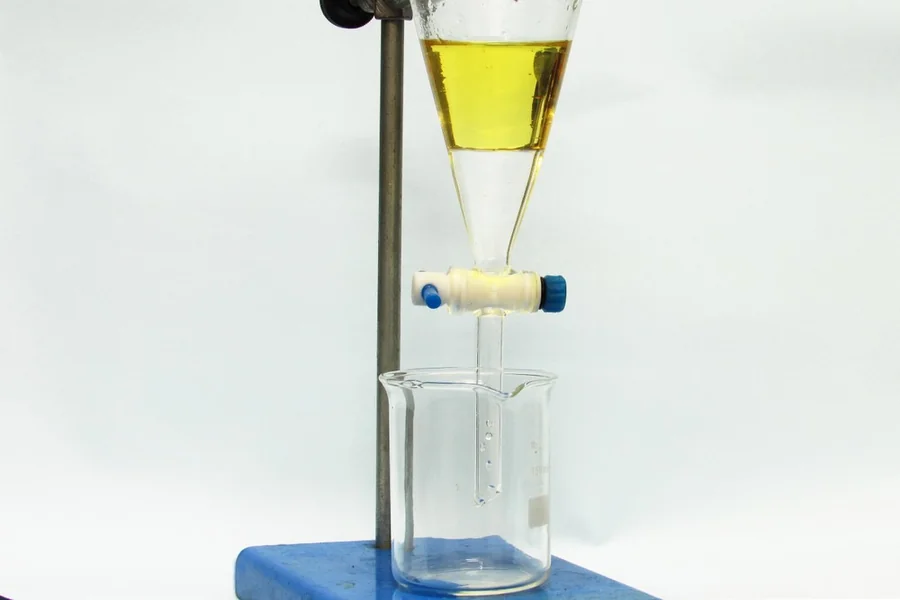
The Physics of Oil-Water Separation: Mastering Particle Size for Compliance
Facility engineers face immense daily pressure to meet strict local wastewater discharge limits. Municipalities are consistently tightening environmental regulations. A discharge limit of under 10 parts per million (ppm) is now a common reality for industrial plants. Failing to meet these strict effluent limits results in severe regulatory fines, unwanted audits, and costly facility downtime.
Solving this compliance challenge requires looking beyond the basic plumbing of your facility. It requires a deep understanding of fluid dynamics and particle size science. Achieving modern compliance is entirely dependent on the physics of particle size and moving away from legacy gravity systems.
While traditional gravity systems struggle to capture droplets smaller than 150 microns, modern environmental standards require a much more aggressive approach. Facilities must now rely on advanced oil water separators engineered to intercept highly dispersed droplets and keep non-compliant wastewater off their books.
The Limitations of Traditional Gravity Separators
Traditional API 421 separators have been a staple in industrial wastewater management for decades. These systems rely entirely on basic gravity and extremely long retention times to separate oil from water. The design assumes that if you slow the water down enough in a massive concrete or steel vault, the lighter oil will eventually float to the surface. Accurate testing is also essential for monitoring separation performance, and businesses can source suitable testing supplies from ShopShimadzu – Laboratory Consumables Supplier Singapore.
This legacy design methodology was established for a different era of environmental compliance. Traditional API 421 separators are meticulously calculated to effectively remove non-emulsified, free-floating oil droplets with a diameter of 150 micrometers (µm) or larger.
Modern industrial processes involve high-pressure pumps, mixing valves, and turbulent flows. These mechanical forces easily shear oil into microscopic droplets far smaller than 150 microns. Relying on a 150-micron standard leaves facilities highly vulnerable to discharging non-compliant wastewater loaded with highly dispersed oil.
The Physics of Separation: Understanding Stokes’ Law
To solve complex wastewater discharge issues, you must look at the math dictating how oil behaves in water. Stokes’ Law is a mathematical equation that calculates the terminal rise velocity of an oil droplet suspended in a fluid. It factors in the gravity, the density of the water, the density of the oil, and the size of the oil droplet.
Because facility engineers cannot control gravity or the density of the fluids they process, they must focus on the one variable they can influence. The settling velocity of a particle is directly proportional to the square of its diameter, making droplet size the most critical factor in separator design.
When you cut a droplet’s size in half, it rises four times slower. This exponential relationship is exactly why traditional gravity separators fail under modern conditions. Stokes’ Law dictates that a 100-micron oil droplet will rise three inches in five minutes, whereas a 20-micron droplet takes 60 minutes to rise the same distance.
| Oil Droplet Size | Time Required to Rise 3 Inches |
|---|---|
| 100 Microns | 5 Minutes |
| 20 Microns | 60 Minutes |
Expecting a massive volume of wastewater to sit perfectly still for 60 minutes is operationally impossible for most high-flow facilities. You need specialized engineering to overcome this mathematical reality.
Decoding Oil States: Free, Dispersed, and Emulsified
Oil does not exist in a single state when mixed with wastewater. Understanding the physical state of the oil in your facility is a prerequisite for specifying the correct separation strategy. The state of the oil directly dictates how the fluid will respond to gravity and coalescing media.
Free oil represents the large, distinct droplets that float readily to the surface. Because these droplets are massive, they experience rapid rise velocities. Basic gravity separators handle free oil quite easily without any advanced internal technology.
Dispersed oil consists of much smaller droplets, typically ranging from 20 to 60 microns in size. These droplets are so small that regular turbulence keeps them suspended in the water column indefinitely. This specific state of oil requires advanced coalescing technology to separate effectively.
Emulsified oil presents an entirely different challenge. This oil is mechanically or chemically bound to the water molecules, often through the use of soaps, detergents, or extreme high-shear pumps. Emulsified oil will never separate through physical coalescing alone. It requires specific chemical treatment to break the bonds prior to any physical separation.
Why 20 Microns is the Modern Compliance Benchmark
Environmental inspectors do not measure your wastewater discharge in microns. They measure the hydrocarbon concentration in parts per million. However, the mechanical equipment you specify does not inherently separate by ppm. Separators are sized and engineered to intercept specific particle sizes.
There is a direct mathematical relationship between particle size removal and overall ppm reduction. To hit strict municipal targets, you must capture the microscopic dispersed droplets that traditional systems let slip through. Modern coalescing separators targeting 20-micron droplets can consistently achieve effluent discharge qualities of 10 ppm or less.
Targeting the 20-micron threshold is the most reliable way to guarantee compliance across varied flow rates and fluctuating oil concentrations. If your facility faces ultra-strict local regulations, you can upgrade your system with High Performance Filter (HPF) packs. These secondary filtration stages can push the effluent quality down to 5 ppm or less.
How Coalescing Media Manipulates Particle Size
Since you cannot change the specific gravity of the oil or water, you must artificially alter the droplet size to speed up the separation process. Modern systems achieve this by using High-Efficiency Coalescer (HEC) packs. These packs sit inside the separator tank and completely intercept the wastewater flow.
HEC packs consist of a complex, random tube matrix made of oleophilic (oil-attracting) materials. As the wastewater flows through this tight matrix, it forces the microscopic 20-micron droplets to bump into the media and into each other. The small droplets collide, stick together, and merge into much larger droplets.
This process artificially increases the diameter of the droplets. Once they grow large enough, they detach from the media and rise rapidly to the surface according to Stokes’ Law. This technology exponentially increases the internal surface area of the tank. Facilities can process massive flow rates while maintaining a surprisingly minimal physical footprint.
Sizing and Specifying the Right Equipment for Your Facility
Evaluating and selecting an upgraded oil-water separator requires precise data gathering. Guessing your flow rate or oil type will lead to undersized equipment and eventual compliance failure. You must build your specification around three primary parameters.
First, mandate a target micron removal of 20 microns. Second, determine the exact specific gravity of the primary hydrocarbon you need to remove. Third, establish your maximum facility flow rate in gallons per minute (GPM), including any surge events. These three data points allow engineers to properly size the internal HEC packs.
You must also consider how the equipment fits into your specific site constraints. Above-grade applications are common when gravity flow to a sanitary sewer is possible. Flush-with-grade or completely below-grade applications are necessary when site gravity constraints demand it, or when the installation area requires heavy vehicle drive-over access.
Finally, prioritize maintenance-friendly engineering in your specification. Separation equipment is only effective if it remains clean and functional. Look for systems featuring lightweight, removable media packs that a single operator can lift. Specify self-flushing matrices to minimize clogging and reduce facility downtime during routine cleanouts.
Conclusion
Understanding Stokes’ Law and particle dynamics is the absolute foundation for solving complex wastewater discharge issues. You cannot effectively clean industrial wastewater by treating it as a basic plumbing problem. It is an engineering challenge governed by fluid physics.
Clinging to 150-micron legacy technology is a fast track to regulatory fines and environmental audits. As local municipalities continue to lower permissible discharge limits, the margin for error shrinks. Outdated gravity systems simply cannot intercept the highly dispersed oil droplets generated by modern industrial processes.
Upgrading to modern coalescing technology is a necessary operational investment. By targeting 20-micron particle sizes and leveraging advanced media matrices, you remove the guesswork from environmental reporting. Specify the right science to guarantee you keep oil out of the water, and off your books.