
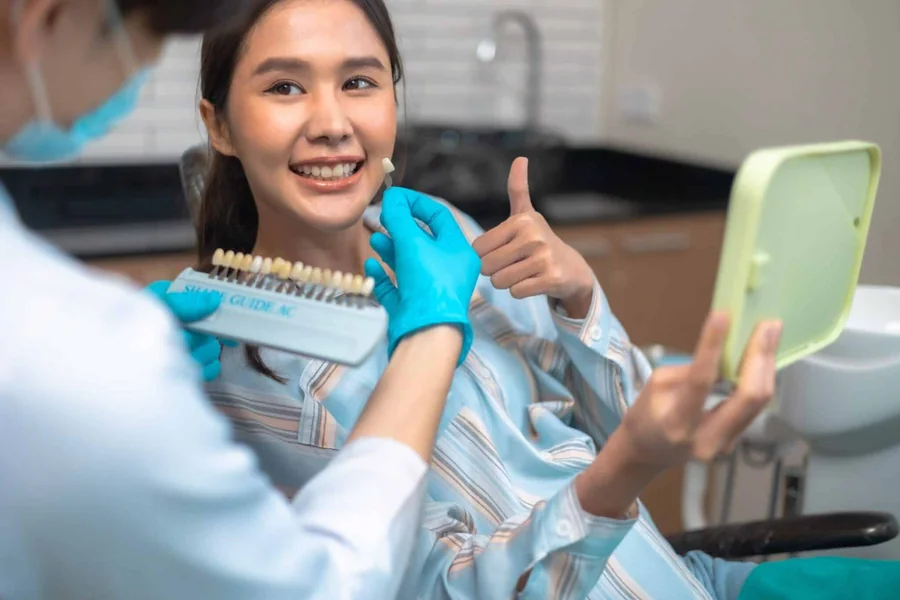
Dental Teeth Whitening Treatment in Singapore for a Brighter Smile
A bright smile can make a noticeable difference to how you look and feel. However, teeth can become darker or stained over time because of everyday habits, ageing, food, drinks and other factors. Brushing regularly helps maintain good oral hygiene, but it may not remove deeper stains or change the natural shade of the teeth.
For people looking for professional teeth whitening, dePacific Dental provides teeth whitening treatment in Singapore with both at-home and in-clinic options. The treatment is designed to improve the appearance of discoloured teeth while allowing patients to receive advice and care from a dental professional. Choosing the dePacific Dental teeth whitening treatment in Singapore can help patients explore suitable whitening options based on their dental needs, preferences and professional recommendations.
What Is Teeth Whitening?
Teeth whitening is a cosmetic dental treatment designed to make natural teeth look lighter. It is different from regular brushing, scaling and polishing.
Scaling and polishing are mainly used to remove plaque, tartar and surface deposits. They are important parts of maintaining oral health, but they do not work in the same way as a professional whitening treatment. dePacific explains that cleaning may make natural teeth look cleaner and smoother, but whitening is more suitable when the concern is tooth discolouration.
A dental professional can assess the condition of the teeth and recommend an appropriate whitening method based on the patient’s needs.
Dental Teeth Whitening Treatment in Singapore
dePacific Dental offers both at-home whitening and professional in-clinic whitening options. This gives patients different ways to approach teeth whitening depending on their preferences and treatment plan.
For at-home whitening, the dentist first takes an impression of the patient’s teeth. Custom dental trays are then prepared to fit the teeth. The patient receives whitening gel and instructions on how to apply it to the trays.
The trays are worn according to the dentist’s instructions. The recommended duration can differ between patients, so following the dental professional’s advice is important.
For in-clinic whitening, the dentist begins by cleaning the surfaces of the teeth. Whitening gel is then applied, followed by the use of a special blue light to activate the gel. The process may be repeated several times during the appointment to achieve the desired result.
Choosing Between At-Home and In-Clinic Whitening
Both options can be useful, but they provide different experiences.
At-home whitening gives patients more control over when they carry out the treatment. Custom trays are made for the individual, which can make them more suitable than generic whitening trays. The dentist can also provide instructions on how the whitening gel should be used.
In-clinic whitening is carried out at the dental practice under professional supervision. This can be a convenient choice for people who prefer to have the treatment performed by a dentist rather than managing the process themselves.
Some patients may benefit from combining both approaches. dePacific offers a power whitening option that includes both professional in-clinic whitening and at-home whitening.
What Happens During a Whitening Appointment?
The exact experience can vary depending on the treatment selected. For professional in-clinic whitening, the dentist first prepares the teeth before applying the whitening product.
The whitening gel is then activated using a special blue light. The process may be repeated during the appointment depending on the desired outcome and the treatment plan.
Having the procedure carried out by a dental professional also means that the condition of the teeth can be considered before treatment. This is useful because not every type of tooth discolouration will respond to whitening in the same way.
A consultation can help determine whether whitening is appropriate and what kind of result can reasonably be expected.
Is Teeth Whitening Suitable for Everyone?
Teeth whitening is mainly intended to improve the colour of natural teeth. However, the treatment may not be suitable in every situation.
Existing dental problems should be assessed before cosmetic treatment. Cavities, damaged teeth, gum problems or significant sensitivity may need attention first. A dentist can examine the mouth and determine whether whitening should proceed.
It is also important to understand that whitening does not change the colour of dental restorations in the same way as natural teeth. Fillings, crowns, veneers and other restorations may not become lighter when natural teeth are whitened.
For this reason, a professional assessment is useful for anyone who already has dental work and is considering whitening.
Managing Tooth Sensitivity
Temporary sensitivity is one of the common concerns associated with teeth whitening. Some people may notice that their teeth feel more sensitive to cold drinks or other sensations after treatment.
dePacific states that sensitivity after whitening is normal for some patients and is typically temporary, often settling after a few days. The dentist can provide advice if sensitivity continues or becomes uncomfortable.
This is another reason why professional guidance can be useful. Instead of guessing how much whitening gel to use or how long to leave it on, patients can follow instructions based on their individual treatment.
Why Professional Whitening Can Be a Better Choice
There are many whitening products available for home use, including whitening toothpastes and strips. These may be convenient, but they may not provide the same results as a professional whitening treatment.
According to dePacific, whitening toothpaste may be less effective when tooth discolouration is more severe, while whitening strips may have a more temporary effect compared with professional whitening gel.
Professional treatment also provides an opportunity for the dentist to check the teeth before whitening. This can help identify dental problems that should be treated before cosmetic procedures are carried out.
Looking After Your Smile After Whitening
Whitening is not a permanent change. Teeth can gradually become stained again as part of everyday life. Good oral hygiene and sensible lifestyle habits can help maintain the results for longer.
Regular brushing and flossing remain important. Professional dental check-ups and cleaning can also help keep the teeth and gums in good condition.
Reducing frequent exposure to strongly coloured drinks and foods may also help limit new stains. If coffee, tea or other staining drinks are part of your daily routine, rinsing the mouth with water afterwards can be a simple habit to consider.
The goal is not simply to whiten the teeth once but to maintain a healthy and clean smile over time.
A Convenient Dental Option in Singapore
dePacific Dental Group currently operates four clinics in Singapore, located in Ang Mo Kio, Balestier, Jurong West and Pasir Ris. The group provides general, cosmetic and other dental services for adults and children.
Patients who are interested in whitening can choose a clinic that is convenient for them and discuss their needs with a dental professional.
The clinics also provide a range of other dental treatments, making it possible for patients to address general oral health concerns as well as cosmetic concerns in the same dental practice.
Making the Most of Professional Teeth Whitening
A brighter smile can improve confidence, but the best whitening treatment is not necessarily the strongest or fastest option. The condition of the teeth, the type of staining and the patient’s expectations all matter.
Professional assessment can help determine whether at-home whitening, in-clinic treatment or a combination of both is appropriate. It can also help patients understand what results are realistic before treatment begins.
For those considering dePacific Dental teeth whitening treatment in Singapore, the combination of professional dental care, personalised treatment options and multiple clinic locations can make the process easier to manage. The important step is to speak with a dentist first, understand the available options and follow the recommended treatment and aftercare instructions.
A whiter smile should also be supported by good oral health. When cosmetic goals are combined with regular dental care, patients can work towards a smile that looks cleaner, brighter and well cared for.