Struggling to Wear Light Colors in Winter? Here’s How to Make Them Work
Winter wardrobes have a habit of drifting toward black, charcoal, navy, and deep brown. These shades are practical, easy to combine, and naturally associated with colder weather, but they can also make outfits feel repetitive after several months. Light colors offer a simple way to make winter clothing feel fresher without sacrificing warmth or practicality.
The challenge is making pale shades look intentional rather than summery or out of season. The key is to combine them with richer textures, substantial fabrics, and darker supporting pieces. Once those elements are balanced, cream, ivory, beige, pale grey, and soft neutrals can become some of the easiest colors to wear throughout winter.
Start With a Warm, Textured Light-Colored Layer
Light shades become much easier to wear in winter when the fabric itself clearly belongs to the colder season. A thin white cotton top may feel more appropriate in spring, while chunky wool, brushed knitwear, cashmere, fleece, and substantial woven fabrics immediately give pale colors a winter character.
Cream and natural-white sweaters are particularly useful because they brighten an outfit without creating the stark contrast that pure white sometimes produces. Traditional wool pieces from https://www.aran.com/ show how natural shades can work especially well when combined with visible knit texture, substantial construction, and patterns that add depth to an otherwise simple color.
This principle works beyond sweaters. A pale wool coat, knitted scarf, textured cardigan, or heavy overshirt can all introduce lighter tones while still looking appropriate for cold conditions. When the material feels warm, the color rarely looks out of place.
Use Darker Colors to Give the Outfit Structure
Wearing light colors in winter does not mean dressing head to toe in cream. In fact, pale pieces often become easier to style when surrounded by darker shades.
A cream sweater with charcoal trousers, for example, creates enough contrast to prevent the outfit from appearing washed out. Ivory knitwear can also work with dark denim, brown boots, navy outerwear, or black accessories.
Think of darker colors as the framework of the outfit. They provide visual weight while allowing one or two lighter pieces to stand out.
This approach is particularly useful for anyone who normally wears dark clothing and wants to experiment gradually. Instead of replacing an entire winter wardrobe, simply introduce a lighter sweater beneath an existing coat or switch a dark scarf for a cream or oatmeal version.
The result feels noticeably different without requiring a completely new way of dressing.
Mix Similar Neutrals Instead of Trying to Match Them Perfectly
One reason people sometimes avoid light-colored outfits is the fear that different shades of white, cream, beige, and grey will clash. In reality, slight differences between these colors can make an outfit more interesting.
An ivory sweater does not have to match beige trousers perfectly. A cream scarf can sit comfortably beside an oatmeal coat, while off-white knitwear can be worn with stone-colored trousers or light grey wool.
The variation creates dimension.
Trying to make every neutral identical can actually make an outfit appear flatter. Mixing several related tones gives each piece more definition and makes the overall look feel deliberate rather than accidental.
Texture helps here as well. Smooth trousers beside a chunky sweater will naturally appear different even if the colors are close. Suede, wool, leather, corduroy, and knitwear all reflect light differently, preventing a neutral outfit from becoming visually monotonous.
Let Your Coat Balance the Lighter Pieces

Outerwear has a major influence on whether light winter clothing feels practical. Because a coat occupies such a large portion of an outfit, it can either amplify pale colors or provide contrast.
Dark coats offer the easiest starting point. Camel, charcoal, navy, dark green, and black outerwear can all frame lighter knitwear effectively. Leaving the coat slightly open allows a cream or ivory layer underneath to brighten the outfit without dominating it.
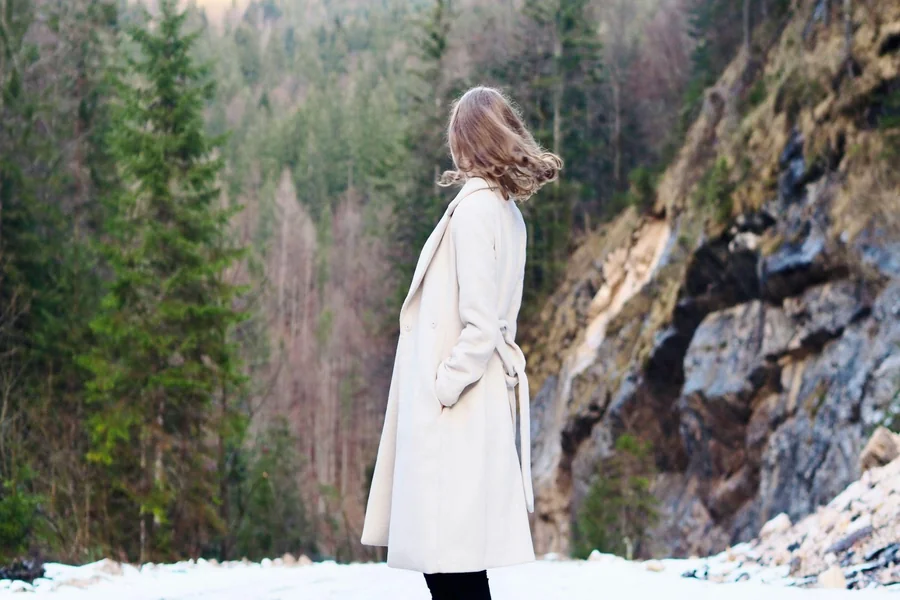
A light coat can work too, particularly when the rest of the outfit includes darker trousers, shoes, or accessories. Beige and stone-colored coats can look especially polished when paired with deeper brown, burgundy, navy, or charcoal.
Rather than treating the coat as an afterthought, consider it part of the color balance. Often, changing the outer layer is enough to make the same pale sweater look either relaxed or considerably more refined.
Choose Footwear That Grounds the Outfit
Shoes and boots are another simple way to prevent light winter outfits from feeling too delicate.
Dark brown leather boots are particularly versatile with cream, beige, and oatmeal clothing because they introduce warmth without producing the sharp contrast of black. Burgundy can work similarly, while black footwear gives lighter outfits a cleaner and more graphic appearance.
Footwear also provides an opportunity to introduce rugged textures. Suede, grain leather, hiking-inspired boots, and substantial soles pair naturally with thick knitwear and wool trousers.
That visual weight matters. Winter clothing tends to involve heavier fabrics, so footwear that looks equally substantial helps the entire outfit feel balanced.
For more casual combinations, even simple dark trainers can work with pale knitwear and jeans. The important point is that the lighter color does not need to continue from head to toe.
Use Accessories to Introduce Light Colors Gradually
Anyone unsure about pale winter clothing can start with smaller pieces before moving to larger garments.
A cream scarf against a navy coat instantly lightens an outfit. Pale gloves, a knitted hat, or an oatmeal-colored bag can achieve a similar effect. Because accessories occupy less visual space, they provide an easy way to see which shades work best with clothes already in the wardrobe.
Once those combinations feel familiar, adding a light sweater, cardigan, or jacket becomes much easier.
Accessories can also connect different parts of an outfit. A cream scarf can echo the tone of a sweater, while brown gloves can coordinate with boots and soften the transition between pale clothing and darker outerwear.
Light colors do not have to fight against winter dressing. When they are paired with substantial textures, darker grounding pieces, layered neutrals, and seasonally appropriate footwear, they can make cold-weather outfits feel warmer, brighter, and considerably less predictable.