What to Do After a Car Accident in Massachusetts: A Guide to Evidence, Medical Care, and Insurance Claims
Key Takeaways
- Safety and medical care should come before paperwork, photographs, or insurance calls.
- Photos, witness details, police information, and medical records can preserve important facts.
- Claims may involve injury-related costs, vehicle damage, lost income, and other documented losses.
- Massachusetts insurance coverage and shared-fault rules can affect how a claim is handled.
- Careful records and measured communication can prevent avoidable confusion after a crash.
Table of Contents
- Take These Steps at the Crash Scene
- Get Medical Care Even If Symptoms Seem Mild
- Save Evidence Before It Disappears
- Report the Crash and Start the Insurance Process
- Track Medical Bills, Lost Income, and Vehicle Losses
- Learn How Shared Fault May Affect Recovery
- Avoid Common Post-Crash Mistakes
- Know When to Ask for Professional Guidance
- A Practical Way to Move Forward
A car accident can turn an ordinary drive into a stressful series of decisions. The most useful first steps are usually simple: get to safety, seek medical attention when needed, document what happened, and keep organized records. People who need help understanding their options after a collision may also consult resources from Jason Stone Injury Lawyers.
Every crash has different facts, injuries, insurance policies, and financial consequences. A calm approach can help protect your health and preserve the details that may matter later, whether the accident involves a minor parking-lot impact, a multi-vehicle collision, or a crash with significant injuries.
Take These Steps at the Crash Scene
Check for injuries and move away from traffic if possible. Call 911 for hurt individuals or hazards. Avoid discussing fault; exchange contact, license, vehicle, and insurance information instead. If safe, photograph vehicles, damages, license plates, and relevant conditions. Obtain witness details before they leave, as symptoms may arise later despite initial well-being.
Get Medical Care Even If Symptoms Seem Mild
Prompt medical evaluation can be important after a crash, particularly when there is head pain, dizziness, numbness, neck or back pain, confusion, weakness, or worsening discomfort. Some injuries, including concussions, soft-tissue injuries, and strains, may not be obvious at the scene.
Medical records also create a timeline that connects the collision, reported symptoms, diagnoses, and treatments. Follow the provider’s instructions, attend recommended follow-up appointments, and retain visit summaries, prescriptions, referrals, work restrictions, and bills.
Questions to Ask a Medical Provider
- What symptoms should be monitored at home?
- When should follow-up care occur?
- Are there limits on working, driving, lifting, or exercise?
- What should happen if pain, dizziness, or other symptoms worsen?
Save Evidence Before It Disappears
Create a basic crash file as soon as possible. Road conditions change, damaged vehicles are repaired, surveillance recordings may be overwritten, and witness memories can fade. Keep digital copies in more than one place, such as a cloud folder and a personal device.
Useful Evidence May Include
- Photos and videos of vehicle damage from several angles.
- Images of signs, lights, lane markings, weather, and road conditions.
- Dashcam footage or nearby business surveillance footage.
- Police report information and witness contact details.
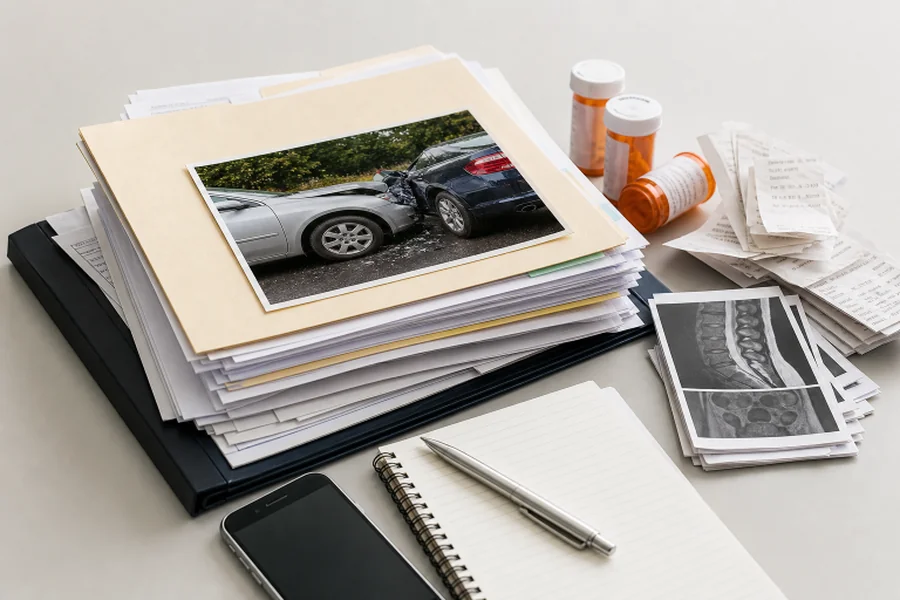
- Medical records, treatment instructions, and prescription receipts.
- Towing invoices, repair estimates, storage charges, and rental-car records.
- A daily journal describing pain, sleep issues, missed work, and activity limits.
A simple timeline can be especially helpful. Write down the date of the crash, medical visits, calls with insurers, repair updates, and work absences while the details are still fresh.
Report the Crash and Start the Insurance Process
Review your insurance policy and report the accident within any required timeframe. Depending on the circumstances, a claim may involve your own policy, the other driver’s liability coverage, personal injury protection, medical payments coverage, or uninsured and underinsured motorist coverage.
Massachusetts drivers can review guidance on auto insurance claims, repairs, and total losses when questions arise about vehicle value, rental transportation, or insurer communications. Keep all claim numbers, adjuster contact details, emails, letters, estimates, and receipts organized in a single file. When communicating with an insurer, ensure you provide accurate information and avoid guessing at details such as speed, distance, injury severity, or event sequences. It’s acceptable to admit uncertainty or to need fact-checking. Avoid labeling an injury as minor until assessed by a medical professional.
Track Medical Bills, Lost Income, and Vehicle Losses
The financial effects of a collision may extend beyond the initial repair bill. Available coverage and compensation depend on the facts, policy terms, medical documentation, and applicable law, but organized records make it easier to identify crash-related expenses.
Common Loss Categories
- Emergency treatment, follow-up care, therapy, medication, and future treatment needs.
- Wages lost while recovering or attending medical appointments.
- Reduced ability to perform regular work duties.
- Vehicle repairs, towing, storage, and rental transportation.
- Other out-of-pocket expenses connected to the collision.
- Pain, emotional distress, and changes to daily life are supported by the claim.
Use separate folders or spreadsheet categories for medical expenses, income records, property damage, and personal notes. This approach makes missing receipts and unresolved bills easier to spot.
Learn How Shared Fault May Affect Recovery
Fault is not always clear immediately after a crash. Questions may arise about speeding, following distance, lane position, distracted driving, traffic signals, visibility, or road conditions. In some cases, more than one person or entity may have contributed to the collision.
Under Massachusetts comparative negligence rules, a person’s share of responsibility can reduce recoverable damages, and recovery may be barred when that person’s negligence exceeds the combined negligence of those against whom recovery is sought. The outcome depends on the evidence and circumstances of the individual case.
Evidence That May Help Clarify Fault
- Vehicle resting positions and damage patterns.
- Dashcam, traffic camera, or surveillance video.
- Witness statements and police observations.
- Phone records when a distraction is alleged.
- Accident reconstruction findings in complex collisions.
Avoid Common Post-Crash Mistakes
- Posting crash details, photos, or injury opinions on social media.
- Delaying medical care despite ongoing symptoms.
- Ignoring treatment instructions or missing follow-up appointments.
- Discarding damaged property before it is documented.
- Accepting a settlement before treatment needs are understood.
- Guessing about facts instead of stating what is known.
- Ignoring bills because the payment responsibility is unclear.
- Missing insurance, claim, or legal deadlines.
A friendly conversation at the crash scene is not a complete investigation. People can remember events differently after the initial shock has passed, which makes early documentation valuable.
Know When to Ask for Professional Guidance
Some accidents remain straightforward insurance matters, while others are more complicated. Additional guidance may be useful when there are serious injuries, disputed fault, several vehicles, commercial drivers, uninsured motorists, long-term work restrictions, or an early settlement offer.
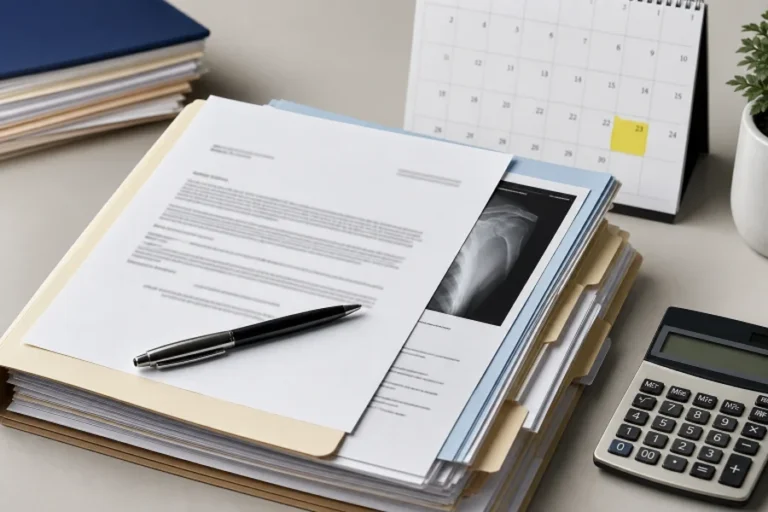
Before seeking help, gather the crash report information, photographs, medical records, policy details, repair documents, correspondence, and a timeline of events. Preparation can make conversations more focused while allowing the injured person to prioritize recovery. Once the immediate claim is under control, drivers reviewing future insurance costs can use a car insurance estimate calculator to compare coverage and pricing options before their next renewal.
A Practical Way to Move Forward
After a Massachusetts car accident, the strongest first steps are usually safety, medical care, careful records, and thoughtful communication. A simple checklist cannot remove the stress of a collision, but it can help preserve the facts, reduce preventable errors, and give you a clearer path forward.