When to Call for AC Repair in Elk Grove: A Practical Diagnostic Guide
Hot Central Valley afternoons can push an air conditioner hard, and small issues often show up before a full breakdown. Homeowners can spot useful clues at the vents, thermostat, and outdoor condenser without opening panels or handling wiring. This guide explains the most common performance symptoms, what they often mean inside the system, safe checks you can handle, when to shut the unit down, and how to prevent repeat problems. The goal is to help you make a calm, informed decision during an Elk Grove heat wave and protect expensive components like the compressor and blower motor while you line up professional help.
-
Early signs your AC needs attention during a heat wave
Watch for warm air at the supply registers, weak airflow through multiple rooms, short cycling that turns the system on and off every few minutes, or indoor humidity that refuses to drop even with a long cooling cycle. Unusual noises like buzzing at the condenser, screeching from the blower wheel, or rattling near the air handler deserve quick attention. Ice on the large insulated refrigerant line or a puddle at the furnace or air handler can also indicate trouble. In these cases, timely AC repair in Elk Grove can prevent a small fault from escalating into a failed compressor or a water-damaged ceiling.
Two quick examples illustrate how symptoms guide next steps. If the vents blow lukewarm air while the outdoor fan is silent and you hear a steady hum, a failed capacitor may be preventing the condenser fan motor from starting. If you see frost on the suction line near the indoor unit and reduced airflow at the registers, a clogged filter or dirty evaporator coil can restrict airflow and cause the coil to freeze, which further chokes airflow until the system stops cooling entirely.
-
What those symptoms often mean inside the system
Warm air with both the indoor blower and outdoor unit running can point to a low refrigerant charge from a leak, a severely clogged condenser coil that cannot shed heat, or a malfunctioning metering device near the evaporator. Weak airflow across several rooms often traces to a filthy return filter, a matted evaporator coil, or a collapsed section of flex duct. Rapid cycling may indicate a miscalibrated thermostat, an oversized system, or a failing contactor that drops power to the compressor. Each condition stresses parts differently, from overheating compressor windings to icing on the evaporator coil.
Noises and smells help narrow the field. A persistent buzz at the condenser combined with a non-spinning fan blade suggests a weak run capacitor or a seized fan motor. Sharp mechanical screeching often points to a blower wheel scraping the housing or worn bearings in a condenser fan. An acrid electrical odor is a red flag for overheating insulation on motor windings or a failing control board; shut the system off. Water under the air handler typically means a clogged condensate drain or a cracked drain pan, which can trigger a float switch and shut down cooling to prevent overflow.
-
Checks you can safely do before a technician arrives.
Confirm the thermostat is set to Cool with the fan on Auto, and verify the setpoint is at least a few degrees below room temperature. Inspect the return air filter and replace it if it is loaded with dust; a high MERV filter captures more particles but can raise static pressure, so match the filter to your system’s blower capacity. Walk the home to make sure supply registers are open and not blocked by rugs or furniture, and that return grilles are not taped over. Outside, clear leaves and grass clippings from the condenser and maintain about 18 inches of clearance for airflow. Avoid spraying high-pressure water at the fins, which bend easily.
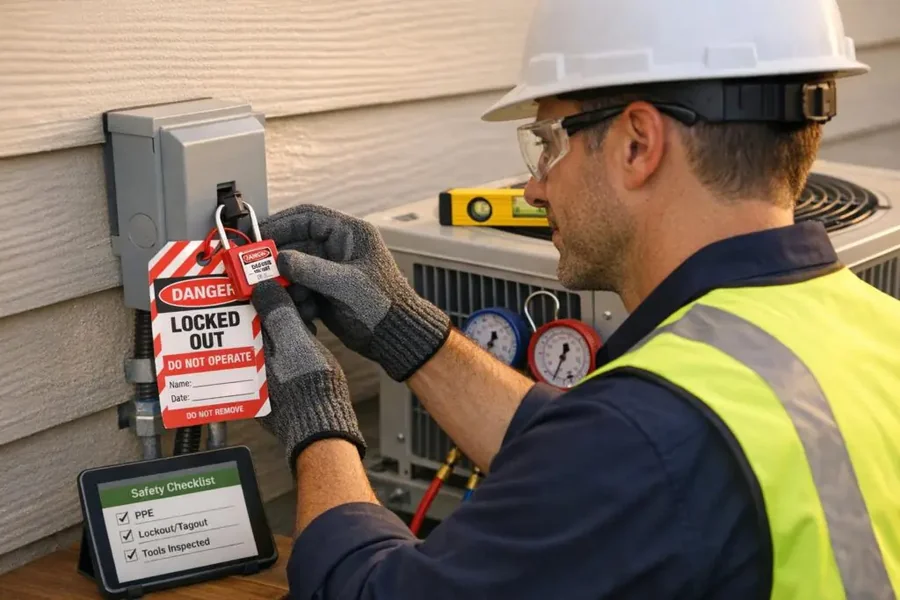
If you find ice on the refrigerant lines or suspect the evaporator coil is frozen, turn the system off at the thermostat and, if safe, at the breaker. Let the ice melt naturally; never chip it off the coil or copper lines. After thawing, run the blower in Fan mode for 30 to 60 minutes to dry the coil and the primary drain pan. This reduces the chance of liquid refrigerant returning to the compressor on the next start, which can cause mechanical damage. Place towels near the air handler to catch any condensate overflow while the drain clears.
-
When to shut it down and prioritize a service call
Some conditions call for an immediate stop. If the breaker trips again right after a reset, the condenser fan hums without turning, or you smell a hot electrical odor from the air handler, shut the system off and wait for a technician. Running through these faults can overheat the compressor, damage motor windings, or cause refrigerant floodback that washes lubricant from the compressor crankcase. Likewise, heavy frost on the suction line all the way into the condenser suggests a serious airflow or charge problem that can harm the compressor if you leave it running.
Comfort matters, but so does protecting equipment that is expensive to replace. Use ceiling fans, close blinds on sun-exposed windows, and cool the most-used rooms rather than forcing a failing system to limp along. Avoid do-it-yourself refrigerant top-offs; effective charging requires gauges, accurate superheat or subcooling measurements, and leak correction. When possible, schedule visits before the first major hot spell to reduce wait times and catch borderline parts like capacitors or contactors before they fail under sustained load.
Preventive steps between Elk Grove heat spikes
Simple habits reduce midseason failures. Replace the return filter every one to three months, more often with pets or heavy dust. Keep 18 to 24 inches of open space around the condenser and trim shrubs to prevent recirculating hot discharge air. Flush the condensate drain line with a small amount of distilled vinegar a few times each cooling season to discourage algae buildup. A professional coil cleaning restores heat transfer on both the evaporator and condenser coils and typically includes checking amperage draw on the compressor and fan motors to spot rising resistance before a breakdown.
Airflow and load matter as much as refrigerant charge. Sealing leaky supply and return ducts, especially in a hot attic, can raise delivered airflow at the registers and stabilize coil temperatures. Adequate attic insulation reduces the system’s cooling load during late-afternoon peaks, shortening run times. Consider a quick spring test run for 15 to 20 minutes to listen for buzzing, clicking, or fan lag and to verify the condenser fan spins freely. Catching these small cues early helps avoid a no-cool emergency on the season’s first 100-degree day.
A cooling system broadcasts useful hints long before it quits. By reading common symptoms, performing a few safe checks, and knowing when to shut the unit down, you can prevent minor faults from turning into major repairs. Pair these habits with seasonal maintenance that includes filter changes, clear condenser airflow, and a clean condensate drain. When professional service is needed, clear notes about what you observed, from short cycling to ice on the suction line, help a technician diagnose faster and protect your equipment through the next heat wave.