
How to Verify a Certified Organic Strawberry Grower: From Paperwork to Field Checks
Strawberries sit at the intersection of flavor and farming complexity. They are shallow-rooted, disease-prone, and beloved, which makes the word “organic” especially meaningful to buyers. Yet labels and market signs can be confusing, and not every claim has the same weight as a valid organic certificate. If you are a chef, retailer, or market shopper who wants confidence in how those berries were grown, you can pair a few respectful questions with simple, on-the-ground observations. Here is a practical guide to understanding the certification framework, spotting field-level practices, and reviewing documents without awkwardness.
-
What Certification Really Confirms for Strawberry Farms
Under the USDA’s National Organic Program (NOP), certification confirms that a farm follows an Organic System Plan (OSP), undergoes annual inspections, maintains detailed records, and uses only allowed inputs from the National List for fertility and pest control. To be listed as a certified organic strawberry grower, fields must complete a three-year transition without prohibited synthetic pesticides, herbicides, or fertilizers. Inspectors verify buffer zones to prevent drift, input storage practices, seed and plant stock documentation, and audit trails that link harvest lots to specific fields.
Certification also commits the farm to soil-building practices such as cover crops, compost applications that meet NOP time-temperature rules, and crop rotations that limit soilborne diseases. For strawberries, this often means rotating with small grains or brassicas to disrupt Verticillium wilt, relying on cultural pest controls like sanitation and canopy airflow, and using mechanical or mulching strategies for weeds instead of synthetic herbicides. These requirements are not a one-time pass; they are checked and renewed annually.
-
Field Signs That Indicate Organic Strawberry Practices
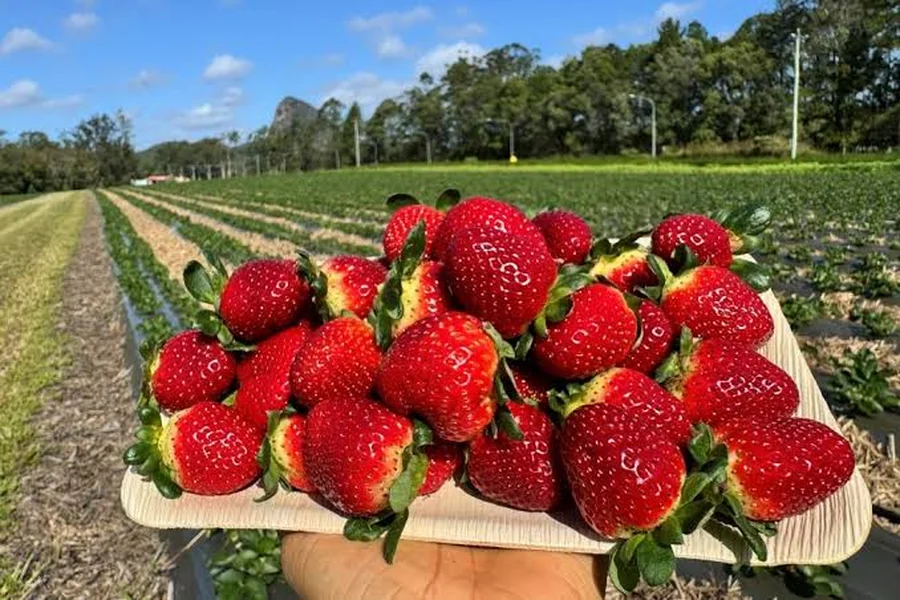
In the field, organic systems favor prevention. Look for buffer strips along fence lines where conventional neighbors might spray, hedgerows for beneficial insects, and sticky cards or pheromone lures signaling active pest monitoring. You may see straw or biodegradable plastic mulch between rows to suppress weeds and keep fruit off wet soil, and row covers or hoop houses used early in the season to protect blossoms from frost without chemical inputs.
Irrigation choices also tell a story. Drip lines deliver water to the root zone, limiting foliar moisture and reducing the risk of Botrytis gray mold compared with overhead irrigation. Mechanical tools for cultivation, hand weeding, or flame weeders often replace herbicides. Together, these practices reduce pest pressure, manage disease risk, and maintain berry quality, but they require steady scouting and labor throughout the season.
-
Paperwork Any Buyer Can Review Without Awkwardness
Asking to see a current organic certificate is normal in professional settings and welcome at most farm stands. A valid certificate lists the farm or operation name, the accredited certifying agent, the certification scope (crop or handling), and the effective and expiration dates. It also includes an approved product list; strawberries should appear there by name. If you are buying packaged berries, compliant retail labels include the certifier’s name and, if a “USDA Organic” seal is used, follow NOP format and placement rules.
Traceability matters for perishable crops. Many growers maintain harvest logs that tie specific beds to dates and lot codes, and keep invoices for OMRI-listed inputs used that year. If you are buying at scale, ask how the farm tracks field maps, transplants or bare root crowns, and sanitation steps between lots. None of this requires a lengthy audit; a few documents matched to what you see in the field provide a credible picture of compliance.
-
Red Flags to Question Before You Buy
Certain phrases deserve a follow-up. “Spray free” or “natural” is not the same as certified organic, and “transitional” means fields are not yet eligible to market fruit as organic. A stall name that doesn’t match the certificate, an expired certificate date, or strawberries not listed in the organic product scope are all solvable issues. Still, they require clarification before assuming the berries are certified. If a vendor presents out-of-season fruit, ask about season-extension tools like tunnels or protected culture rather than assuming an off-farm source.
Trade-Offs: Real Organic Growers Balance All Season
Organic strawberries are not just conventional berries minus a few sprays; growers manage them around different constraints. Flame weeding, hand hoeing, and mulching reduce herbicide use but add labor and material costs, and plastic mulch can raise disposal questions even when it improves early fruit quality. Rotations that prevent Verticillium and other soil diseases ask growers to rest fields or plant non-cash cover crops, trading short-term income for long-term soil health. Pest control with biologicals or approved substances often hinges on precise timing and frequent scouting rather than residual activity.
These trade-offs shape availability and price. Fruit ripens fast, and organic fields may be picked more frequently to head off mold during humid weeks. Drip irrigation and canopy pruning help, but a heavy rain can still push Botrytis pressure overnight. Understanding these realities helps buyers set practical expectations for seasonal volume, pack styles, and shelf life without pressuring growers toward shortcuts.
Two quick scenarios show how this plays out. A restaurant chef who wants weekend cases can ask for the certificate, request typical lot codes on invoices, and schedule deliveries right after morning picks to minimize handling time. A parent at a U-pick can scan the posted certificate, note the certifier’s name, and ask why some rows are covered and others mulched with straw, learning how those choices keep berries clean and reduce disease. In each case, simple questions and quick checks align trust with evidence.
Confidence in organic strawberries comes from layering what you see, what’s documented, and what the rules require. Certification verifies the system, field practices show how that system operates under real weather and pest pressure, and basic paperwork ties fruit to specific fields on specific days. Ask for the current certificate, glance at the product list, look for buffer zones, mulches, and drip lines, and keep the conversation seasonal. When you pair these habits, you support growers who do the work and bring home berries that match your standards.