How to Use an AI Face Analyzer to Understand Your Facial Features and Proportions


A face analyzer helps you understand your facial features by examining their proportions, shape, and symmetry. Instead of relying entirely on a mirror or guessing your face shape, AI-powered facial analysis provides a structured way to explore your appearance.
Facefy uses artificial intelligence to analyze facial characteristics from a photograph. It can help you explore your face shape, facial proportions, jawline, eye shape, and other appearance-related features.
The results can support personal styling decisions, from choosing hairstyles to finding glasses that complement your features.
What Is an AI Face Analyzer?
An AI face analyzer is a digital tool that uses computer vision to examine visible facial characteristics in photographs.
Unlike facial recognition technology, which identifies or verifies individuals, facial analysis focuses on characteristics such as face shape, proportions, and symmetry.
AI facial analysis can examine:
- Face shape: Estimates whether your face is oval, round, square, heart-shaped, diamond, oblong, or triangular.
- Facial proportions: Examines relationships between facial length, width, and individual features.
- Facial symmetry: Compares characteristics on opposite sides of the face.
- Jawline structure: Evaluates apparent jaw width, angles, and definition.
- Eye characteristics: Explores eye shape, spacing, and orientation.
- Styling considerations: Connects facial characteristics with hairstyle and grooming choices.
These measurements describe facial geometry rather than objectively measuring beauty.
How Does an AI Face Shape Detector Work?
AI face shape detection uses computer vision to examine photographs and identify patterns associated with different facial structures.
The process generally involves three stages.
1. Facial Detection and Landmark Identification
Computer vision identifies the face within the photograph.
Facial landmark detection then locates recognizable features, including the eyes, nose, mouth, chin, and jawline.
These reference points help estimate facial geometry.
2. Facial Measurements and Ratio Analysis
The software examines relationships between forehead width, cheekbone width, jaw width, and overall facial length.
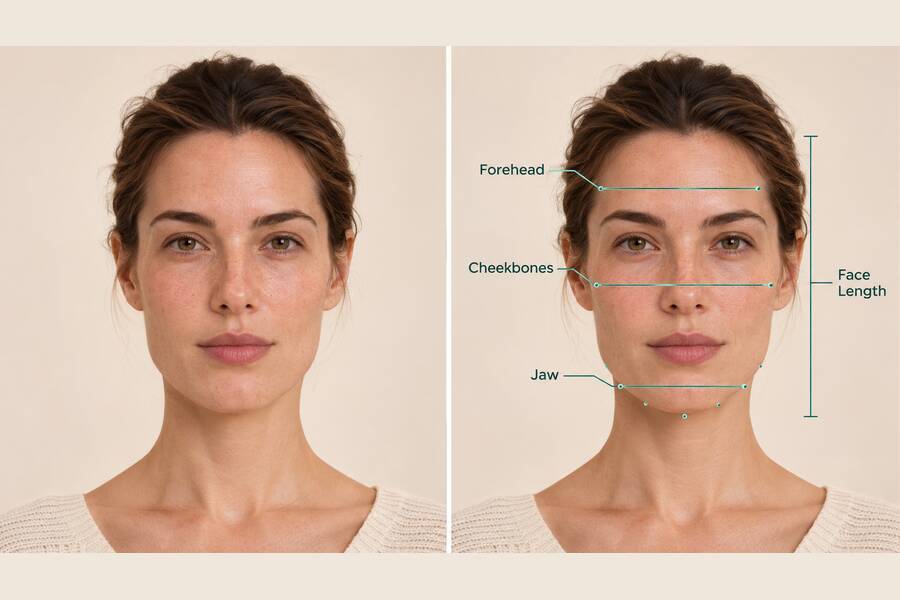
For example, an elongated face may have oblong characteristics, while a broad, angular jaw may suggest a square shape.
However, camera perspective and head positioning can influence these measurements.
3. Face Shape Classification
The AI compares estimated facial characteristics with common face shape categories.
Results represent the closest visual match rather than a definitive anatomical classification.
Many people naturally have characteristics associated with multiple shapes.
For readers interested in exploring their facial structure, Facefy’s AI Face Shape Detector provides a convenient starting point.
Understanding the Seven Common Face Shapes
Face shapes are classified according to relationships between facial length, forehead, cheekbones, and jawline.
Oval Face Shape
Oval faces are generally longer than they are wide, with gently curved contours and rounded jawlines.
Layered cuts, bobs, and longer hairstyles offer different framing possibilities.
Round Face Shape
Round faces often have a similar length and face width, which creates a circular appearance, along with fuller cheeks and curved jawlines.
Longer layers and crown volume can create an elongated visual effect.
Square Face Shape
Square faces commonly feature a broad forehead, prominent jaw angles, and similar widths across the forehead and jaw.
Soft layers and rounded glasses contrast with angular features, while structured styles emphasize them.
Heart-Shaped Face
Heart-shaped faces have a wider forehead and taper through the lower face to a narrow, pointed chin.
Chin-length bobs and side-swept bangs can add fullness around the lower face.
Diamond Face Shape
Diamond faces feature high cheekbones, a narrow forehead, and a pointed chin, with narrower forehead and jaw measurements.
Hairstyles with volume near the forehead or chin create different framing effects.
Oblong or Rectangular Face
Oblong faces appear noticeably longer than they are wide.
Curtain bangs, textured layers, and side volume can emphasize horizontal proportions.
Triangle or Pear Face Shape
Triangular faces generally have wider jawlines than foreheads.
Hairstyles with volume around the temples can create contrast with the lower face.
These categories provide styling references rather than rules about desirable features.
Key Facial Measurements Used in Face Analysis
AI facial analysis examines several measurements together.
Face Length and Width
Face length describes vertical facial dimensions, while width describes the horizontal span.
Comparing face length with face width helps identify the overall shape, making it easier to distinguish elongated faces from wider or rounder shapes.
Cheekbone and Forehead Width
Cheekbone prominence influences the overall facial outline.
Prominent cheekbones combined with narrower forehead and jaw measurements may indicate diamond characteristics.
Jawline and Chin Structure
A broad, angular jaw may suggest square characteristics, while a curved jaw can contribute to round or oval appearances.
Chin width and projection also influence facial proportions and can affect the apparent jaw angle in a photo, even though a front-facing image cannot capture the true jaw angle perfectly.
Bone Structure and Soft Tissue
Facial appearance reflects both skeletal structure and surrounding soft tissues.
Skin, muscle, and facial fat influence visible contours, so photographs cannot precisely isolate bone structure.
How to Analyze Your Face with Facefy
Getting useful results begins with choosing an appropriate photograph.
Step 1: Choose a Clear Photograph
Use a front-facing image with your entire face visible.
For consistent results:
- Choose soft, even lighting.
- Keep your head straight.
- Maintain a relaxed expression.
- Move hair away from your forehead and jawline.
- Avoid beauty filters and strong shadows.
Step 2: Upload Your Photo
Open the relevant Facefy analysis tool and upload your photograph.
The AI examines visible characteristics to generate an appearance-based assessment.
Available results depend on the analysis selected.
Step 3: Interpret Your Results
Review your estimated face shape and additional facial characteristics.
Treat the findings as guidance rather than exact anatomical measurements.
Step 4: Compare Different Photographs
Experiment with photographs taken under different lighting conditions or camera angles.
Notice how changes in expression and positioning influence your results.
Manual vs. AI Face Shape Detection
Both manual measurements and AI analysis can help you explore facial proportions.
Manual analysis uses a mirror or measuring tape. You identify measurement points and compare facial dimensions yourself.
AI analysis uses photographs and software to estimate facial landmarks and proportions automatically.
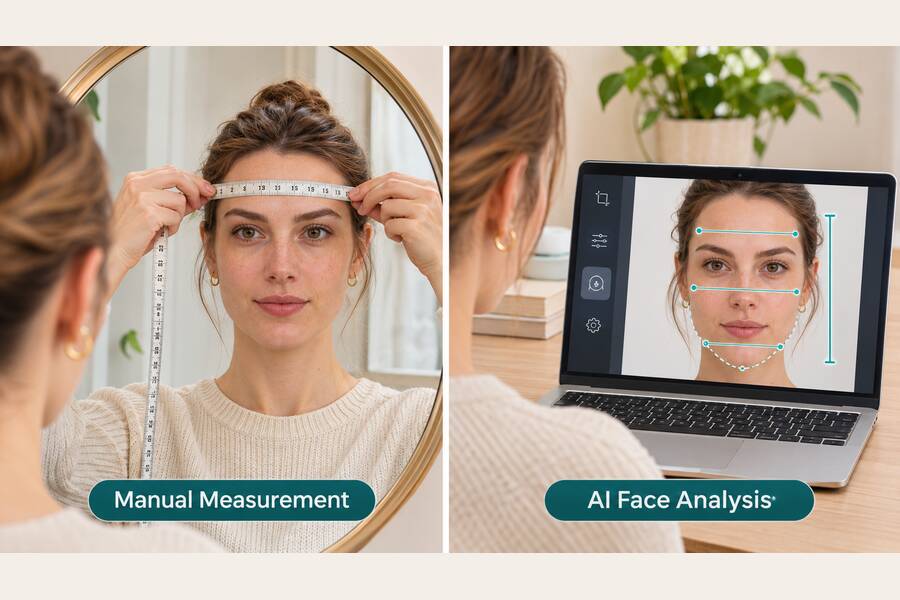
Manual measurements depend on consistent technique, while AI estimates depend on photograph quality and camera perspective.
Neither method guarantees a perfectly accurate classification.
Using both approaches can provide a broader understanding of your facial structure.
Beyond Face Shape: What Else Can Facial Analysis Explore?
Face shape represents only one aspect of facial appearance.
For a more comprehensive understanding, Facefy offers AI-powered tools that help users explore facial proportions, symmetry, eye characteristics, and other visible features.
This makes Facefy a useful option for anyone interested in understanding their facial structure before exploring hairstyles, eyewear, makeup, or grooming choices.
Facial Symmetry
Facial symmetry describes similarities between corresponding features on opposite sides of the face.
Natural asymmetry is common, and photographs can exaggerate differences through lighting or head positioning.
Facial Thirds and Proportions
Facial proportions can be examined by dividing the face into upper, middle, and lower regions.
These measurements describe relative facial dimensions without establishing universal attractiveness standards.
Eye Shape and Canthal Tilt
Eye analysis considers eyelid contours, spacing, and eye-corner orientation.
Canthal tilt describes the angle between the inner and outer corners of the eyes.
These characteristics vary naturally between individuals.
Golden Ratio and Facial Harmony
The golden ratio, approximately 1.618, sometimes appears in facial proportion discussions.
However, no scientifically established formula determines universal facial beauty.
For a more detailed exploration of these characteristics, Facefy’s face analyzer provides a dedicated way to examine facial features and proportions beyond basic face shape identification.
Its Face Report offers another reference for understanding how visible facial characteristics relate to one another.
Using Face Analysis for Hairstyles, Glasses, and Grooming
Facial analysis becomes particularly useful when applied to personal styling.
Choosing Hairstyles
Face shape can guide hairstyle experimentation, but hair texture, density, length, and maintenance also matter.
Long layers may complement round faces, while curtain bangs can create side volume around oblong faces.
Selecting Glasses
Eyewear changes how the face is framed.
Rounded frames contrast with angular jawlines, while rectangular frames introduce structure around softer contours.
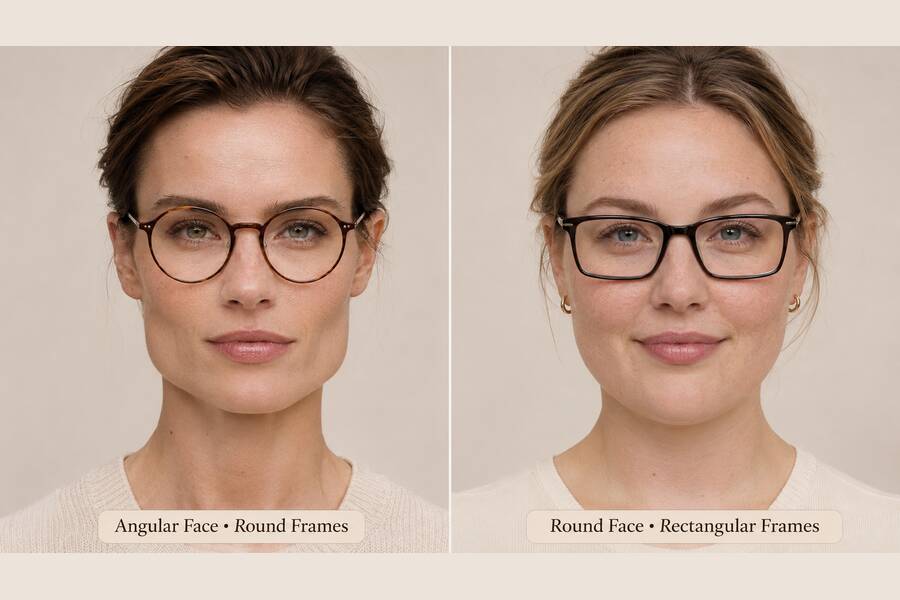
Comfort and proper fit remain essential.
Makeup and Facial Contouring
Makeup can emphasize cheekbones, jawlines, and other features through highlighting and shading.
There is no requirement to make every face appear oval or symmetrical.
Beard Styling and Grooming
Beard shape influences the apparent proportions of the lower face.
A fuller chin may visually lengthen a round face, while side fullness can change the appearance of a narrow jaw.
Understanding the Limitations of AI Face Analysis
AI face analyzers provide estimates based on photographs rather than direct anatomical measurements.
Lighting, camera angles, lens distortion, facial expressions, accessories, and image quality can influence results.
These assessments should not be used to infer personality, intelligence, medical conditions, or personal worth.
Review privacy policies before uploading photographs to online services.
Frequently Asked Questions About Face Analyzers
Is an AI face analyzer accurate?
AI can estimate visible facial characteristics, but accuracy depends on photograph quality and analysis methods.
Can AI identify my exact face shape?
AI estimates the closest matching category, although many faces combine characteristics from multiple shapes.
Can I analyze my face using a selfie?
Yes. A clear, front-facing selfie can provide suitable input.
Does facial symmetry determine attractiveness?
No. Attractiveness is subjective and influenced by many factors beyond symmetry.
Can a face analyzer recommend hairstyles?
Face shape analysis can inform hairstyle choices alongside hair texture, density, and personal preferences.
Is Facefy a medical diagnostic tool?
No. Facefy supports appearance exploration and personal styling rather than medical diagnosis.
Explore Your Facial Features with Greater Confidence
An AI face analyzer offers a convenient way to explore facial shape, proportions, symmetry, and other visible characteristics.
Combining these observations with personal preferences can help you make more informed decisions about hairstyles, eyewear, makeup, and grooming.
The most useful approach is treating facial analysis as a starting point for experimentation rather than a final judgment about appearance.
Understanding your natural features should expand your styling possibilities, not limit how you express yourself.