Electrical Upgrades That Can Make an Older Home Safer
Older homes have real charm. Solid framing, thoughtful details, and a kind of construction that most new builds just don’t replicate. But the wiring behind those walls? That’s usually a different story. Panels and circuits put in decades ago weren’t built for how we live now, and that gap between old systems and modern appliances is where problems tend to start.
The good news is that you don’t need to gut the place to fix it. A few targeted upgrades can bring an older home up to current standards. Here’s what to know.
Common Electrical Hazards in Older Homes
Outdated and Deteriorating Wiring
Wiring ages, and not gracefully. Insulation dries out and cracks over time, which can leave conductors exposed and prone to arcing or sparking. If your home was built before the 1970s, there’s also a chance it has aluminum branch circuit wiring. Unlike copper, aluminum expands and contracts more with temperature changes, and those connections tend to loosen over the years.
Insufficient Grounding
Grounding wasn’t always part of the picture. Plenty of older homes were wired without it, and that matters more than it might seem. Without a safe path to ground, excess voltage from a fault or surge needs somewhere to go – and it’ll find it, whether that’s through an appliance, a fixture, or a person.
Overloaded Circuits
Think about a home from the 1950s. It was wired for the appliances people actually had back then. Now you’ve got a dishwasher running, an EV charging in the garage, a home office going, and smart devices plugged in across the house – often all at once. Older panels weren’t designed for that kind of load, and you feel it in tripped breakers, warm outlets, and, in the worst cases, fires.
Knob-and-Tube Wiring
If your home was built before 1950, there’s a chance it still has knob-and-tube wiring. There’s no ground wire, and it was never meant to sit under insulation. When homeowners add attic insulation without addressing the old wiring, heat gets trapped – and the fire risk goes up considerably.
Missing GFCI and AFCI Protection
Modern construction requires ground-fault circuit interrupters (GFCIs) and arc fault circuit interrupters (AFCIs), and the reasons are straightforward. GFCIs cut power quickly to prevent electrocution near water. AFCIs detect dangerous arcing before it becomes a fire. When most older homes were wired, neither technology was around yet.
Essential Electrical Upgrades for Safety
Upgrade the Circuit Breaker Panel
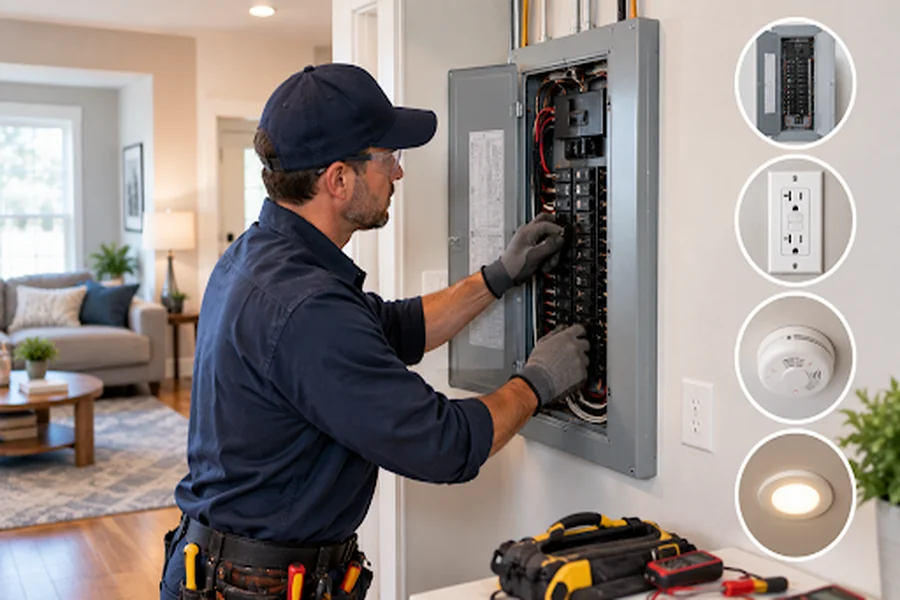
Still working with a fuse box, or a panel that’s clearly at its limit? Replacing it is one of the most impactful changes you can make. A properly rated breaker panel protects every circuit from overcurrent, handles today’s demands, and gives you room to grow as needs change.
Replace Deteriorated or Inadequate Wiring
Knob-and-tube and worn-out insulation should be swapped out for modern copper conductors that meet current code. It’s a bigger project, no question – but it eliminates one of the most common causes of electrical fires in older homes, and that’s not nothing.
Install GFCI Outlets in High-Risk Areas
Kitchens, bathrooms, garages, outdoor outlets – current code requires GFCI protection in all of them. Retrofitting an older home is usually pretty manageable, and once they’re in, you’ve got immediate protection against ground fault hazards.
Add AFCI Protection to Living Spaces
AFCI breakers should be installed on circuits serving bedrooms and main living areas, where a frayed cord or loose connection is most likely to cause arcing. Many jurisdictions now require them during any panel upgrade or significant electrical work.
Upgrade the Grounding System
A licensed electrician can check whether your current grounding is adequate and put a proper system in where it’s missing. It’s a foundational step – most of the other upgrades here rely on it.
The Right Time to Act Is Before Something Goes Wrong
Electrical issues tend to stay hidden until something goes wrong. If your home is more than 30 years old and hasn’t had a full inspection, scheduling one is a smart first move. A local electrician in West Orange can assess your panel, wiring, and protection devices, then give you a clear picture of where things stand and which upgrades to prioritize.
This isn’t just about passing code. It’s about protecting your home, the people in it, and the value you’ve put into it over the years.