
Popular Hemp Compounds Compared: What’s the Difference, Benefits, Effects, and Which One Is Right for You?

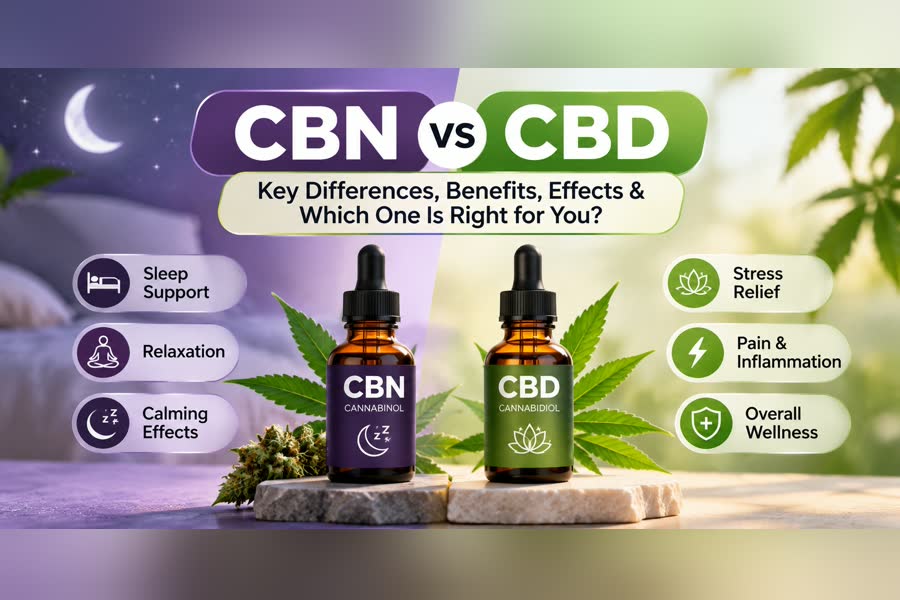
Cannabinoids have become an increasingly discussed part of the cannabis and hemp industry, particularly as consumers explore products designed to support sleep, relaxation, and overall wellness. Among the many cannabinoids found in the cannabis plant, CBN (cannabinol) and CBD (cannabidiol) have attracted considerable attention.
Although both compounds come from the cannabis plant and interact with the body’s endocannabinoid system, they have different chemical properties, potential effects, and research backgrounds.
CBD is widely recognized for its potential wellness applications, while CBN is gaining attention primarily because of its association with sleep-related products. However, understanding the differences between these two cannabinoids requires looking beyond marketing claims.
So, what exactly separates CBN from CBD? Do they produce different effects? Is CBN better for sleep, and can CBD provide similar benefits?
This guide explores CBN vs CBD, including their potential benefits, how they work, side effects, product types, and what consumers should consider before choosing either cannabinoid.
What Is CBN (Cannabinol)?
Cannabinol, commonly known as CBN, is a naturally occurring cannabinoid found in the cannabis plant. Unlike some other cannabinoids, CBN is primarily formed when THC (tetrahydrocannabinol) undergoes oxidation and degradation over time, particularly when exposed to heat, light, and oxygen.
Although CBN occurs naturally in cannabis, it is generally present in much smaller concentrations than CBD or THC.
CBN has attracted growing interest in the wellness industry, particularly in products marketed for nighttime relaxation and sleep support.
Researchers are investigating its potential effects on sleep, pain, inflammation, and other biological processes. However, human research remains limited, and there is currently insufficient evidence to establish CBN as an effective treatment for insomnia or other medical conditions.
How Does CBN Work?
CBN interacts with the body’s endocannabinoid system (ECS), a complex network of receptors, enzymes, and naturally produced compounds that helps regulate several physiological processes.
The ECS is involved in functions such as:
- Sleep-wake cycles
- Mood and emotional responses
- Pain perception
- Immune system activity
- Appetite and metabolism
CBN can interact with cannabinoid receptors, particularly CB1 and CB2, although its receptor activity differs from that of THC.
CBN has a relatively weak psychoactive profile compared with THC. However, it should not automatically be considered completely non-intoxicating, especially when products contain other cannabinoids.
Potential Benefits of CBN
CBN is being studied for several potential applications, although the available scientific evidence varies.
1. Sleep Support
CBN is frequently marketed as a sleep-supporting cannabinoid. Some preliminary research has explored its potential relationship with sleep, but strong clinical evidence demonstrating that CBN independently improves sleep in humans is still lacking.
Consumers interested in CBN products should distinguish between traditional marketing claims and scientifically established outcomes.
2. Relaxation
CBN is included in some nighttime wellness formulations designed to promote relaxation. However, whether CBN itself produces meaningful relaxation in humans requires further investigation.
3. Pain and Inflammation Research
Early laboratory and preclinical research has explored CBN’s potential interactions with pain and inflammatory pathways. These findings are interesting but do not establish its effectiveness for treating pain or inflammatory conditions in humans.
What Is CBD (Cannabidiol)?
Cannabidiol, commonly known as CBD, is one of the most abundant and extensively researched cannabinoids found in the cannabis plant.
Unlike THC, CBD does not typically produce an intoxicating high. This characteristic has contributed to its popularity in oils, capsules, topical products, gummies, and other hemp-derived formulations.
CBD has been studied for its potential role in several areas, including anxiety, epilepsy, pain, and inflammation.
Importantly, CBD is not simply a wellness ingredient with unverified benefits. A purified prescription CBD formulation, Epidiolex, has been approved by the US Food and Drug Administration for certain seizure disorders. This approval does not mean that all commercially available CBD products have the same clinical evidence or regulatory status.
How Does CBD Work?
CBD interacts with the endocannabinoid system differently from THC and CBN.
Rather than strongly binding to CB1 and CB2 receptors, CBD appears to influence several biological pathways and receptors involved in pain perception, inflammation, mood, and other physiological functions.
Its mechanisms are complex and are still being investigated.
CBD may influence:
- Endocannabinoid signalling
- Serotonin-related receptor activity
- Inflammatory pathways
- Pain-related signalling mechanisms
- Certain neurological processes
These interactions help explain why researchers are investigating CBD for a variety of potential therapeutic applications.
Potential Benefits of CBD
CBD has a broader research base than CBN, although evidence differs significantly depending on the condition being studied.
1. Potential Anxiety Support
Some clinical studies have investigated CBD’s potential effects on anxiety-related symptoms. Early findings are promising in certain contexts, but larger and more rigorous studies are needed to establish its effectiveness, appropriate dosage, and long-term safety.
2. Pain and Inflammation Research
CBD is being studied for its potential influence on inflammatory pathways and pain signalling. However, evidence supporting CBD as a standalone treatment for chronic pain remains limited.
3. Epilepsy Treatment
One of the strongest areas of clinical evidence for CBD involves certain forms of epilepsy.
The FDA-approved prescription medication Epidiolex contains purified CBD and is used to treat seizures associated with Lennox-Gastaut syndrome, Dravet syndrome, and tuberous sclerosis complex.
4. Sleep-Related Research
CBD is also being investigated for its potential relationship with sleep quality.
Some people use CBD products as part of their nighttime wellness routines. However, research has not consistently demonstrated that CBD directly improves sleep, and its effects may depend on factors such as dosage, individual physiology, and underlying sleep difficulties.
CBN vs CBD: Key Differences at a Glance
Although CBN and CBD share a botanical origin, they differ in their chemical structure, formation, research background, and potential applications.
The following comparison highlights their most important differences.
| Comparison | CBN | CBD |
|---|---|---|
| Full name | Cannabinol | Cannabidiol |
| Cannabinoid type | Naturally occurring cannabinoid | Naturally occurring cannabinoid |
| Formation | Primarily formed through THC degradation | Produced naturally by the cannabis plant |
| Psychoactive effects | Mild psychoactive potential; limited evidence | Generally non-intoxicating |
| Research focus | Sleep, pain, inflammation | Epilepsy, anxiety, pain, inflammation, sleep |
| Sleep research | Preliminary and limited | More extensive but mixed |
| Interaction with ECS | Interacts with CB1 and CB2 receptors | Primarily indirect and complex interactions |
| Common product forms | Oils, gummies, capsules | Oils, gummies, capsules, creams |
| Research maturity | Relatively limited | More extensively studied |
| FDA-approved medication | No approved CBN medication | Purified CBD medication approved for certain seizure disorders |
Important: Neither cannabinoid should be considered a substitute for prescribed medical treatment. The effects of commercially available products can also vary depending on formulation, concentration, and other ingredients.
CBN vs CBD for Sleep: Which One Is Better?
Sleep is one of the main reasons consumers explore CBN and CBD products. If you are also working on your evening routine, you may like our guide to reading a dispensary menu: formats, labels and dosing.
CBN is frequently associated with nighttime formulations, while CBD is often marketed for relaxation and general wellness. But does one cannabinoid actually work better for sleep?
The answer is not straightforward because there is limited high-quality human research directly comparing CBN and CBD for sleep.
CBN for Sleep
CBN has gained popularity as an ingredient in sleep-oriented gummies and oils.
Its reputation is largely connected to its association with aged cannabis and claims about its sedating properties. However, the idea that CBN is inherently a powerful sleep aid is not firmly established by clinical evidence.
A small 2024 randomized controlled trial investigated the effects of CBN on sleep quality in adults with self-reported sleep difficulties. The findings suggested that certain CBN doses might improve some sleep-related outcomes, but further research is needed to confirm these results.
CBN is therefore an interesting subject for sleep research, rather than a proven treatment for insomnia.
CBD for Sleep
CBD has also attracted attention among people experiencing occasional sleep difficulties.
Researchers are investigating whether CBD may influence sleep indirectly by affecting factors such as anxiety, discomfort, and other conditions that can interfere with rest.
However, the evidence is mixed.
Some studies suggest potential improvements in sleep-related outcomes, while others have found no significant improvement in sleep itself.
CBN vs CBD for Sleep: Comparison
| Factor | CBN | CBD |
|---|---|---|
| Common market positioning | Nighttime and sleep products | Relaxation and general wellness |
| Direct sleep research | Limited | More extensive but mixed |
| Human clinical evidence | Emerging | Inconsistent |
| Established insomnia treatment | No | No |
| Long-term sleep safety | Insufficient evidence | Insufficient evidence for many uses |
The takeaway: CBN is more strongly associated with sleep-focused marketing, but there is not enough clinical evidence to conclude that it is better than CBD for improving sleep.
Can You Take CBN and CBD Together?
Yes, CBN and CBD are available together in some cannabinoid formulations.
These products are often marketed as nighttime blends or multi-cannabinoid wellness products.
The idea behind combining them is to explore the potentially complementary properties of different cannabinoids. However, the term entourage effect is often used in cannabis marketing without sufficient clinical evidence to establish that combining CBN and CBD produces superior results.
Potential Reasons for Combining CBN and CBD
- Different cannabinoid interactions: CBN and CBD interact with biological pathways differently.
- Combined formulations: Some manufacturers formulate products with multiple cannabinoids to offer a broader cannabinoid profile.
- Personal wellness preferences: Consumers may prefer products that combine cannabinoids rather than using individual ingredients.
However, combining cannabinoids does not automatically make a product more effective.
It is also important to consider the total cannabinoid content, additional ingredients, and potential interactions with medications.
Anyone taking prescription medication should consult a qualified healthcare professional before using cannabinoid products.
CBN vs CBD: Side Effects and Safety Considerations
Although CBN and CBD are often marketed as natural wellness ingredients, natural does not automatically mean risk-free.
Both cannabinoids require additional research to establish their long-term safety profiles.
Potential Side Effects of CBN
Human safety data for CBN remain limited. Potential concerns include:
- Drowsiness or sedation
- Dizziness
- Possible interactions with medications
- Unpredictable effects when combined with THC or other cannabinoids
Because CBN products may contain additional cannabinoids, consumers should examine the complete ingredient list rather than focusing only on the CBN concentration.
Potential Side Effects of CBD
CBD has been studied more extensively, and its known potential side effects include:
- Diarrhea
- Fatigue
- Changes in appetite
- Drowsiness
- Changes in liver enzyme levels
CBD can also interact with certain prescription medications, including medications that carry a risk of liver-related side effects.
The FDA recommends caution when using CBD products, particularly because non-prescription products may differ in quality, concentration, and purity. For a broader overview, see Harvard Health’s explainer on what is known about cannabidiol.
Safety Comparison
| Safety Factor | CBN | CBD |
|---|---|---|
| Human safety research | Limited | More extensive |
| Possible drowsiness | Yes | Yes |
| Potential drug interactions | Possible, insufficiently studied | Established for certain medications |
| Liver-related concerns | Insufficient human data | Documented in clinical research |
| Long-term safety | Not well established | Still requires further study |
Safety reminder: Pregnant or breastfeeding individuals should avoid CBD and other cannabis-derived cannabinoid products unless specifically advised otherwise by their healthcare professional. Cannabinoid products should also be kept away from children and pets.
CBN vs CBD: What Should You Look for When Buying Products?
Whether you are considering CBN, CBD, or a combination of both, choosing a quality product is just as important as understanding the cannabinoid itself.
The market includes numerous oils, gummies, capsules, and other formulations. However, product quality and transparency can vary considerably.
Here are some important factors to consider before purchasing.
1. Check Third-Party Lab Testing
One of the most important considerations is whether the product has undergone independent laboratory testing.
Look for a Certificate of Analysis (COA) that confirms:
- Cannabinoid concentration
- CBD and CBN content
- THC concentration
- Heavy metal contamination
- Pesticide residues
- Residual solvents
- Microbial contamination
A reliable COA should correspond to the specific product batch rather than displaying generic laboratory results.
2. Understand the Product’s Cannabinoid Profile
Not all cannabinoid products contain the same ingredients.
CBD products may be available in three common formulations:
| Formulation | Description |
|---|---|
| Full-spectrum CBD | Contains CBD alongside other naturally occurring hemp compounds, potentially including trace THC within applicable legal limits |
| Broad-spectrum CBD | Contains multiple hemp compounds and is generally formulated to remove THC |
| CBD isolate | Contains highly purified CBD with most other plant compounds removed |
CBN products can also differ in their cannabinoid composition. Some contain isolated CBN, while others combine it with CBD, THC, or additional hemp-derived compounds.
Always check the actual laboratory report to understand what is present.
3. Examine the Ingredient List
Look beyond the cannabinoid content.
For oils, check the carrier oil and additional ingredients. For gummies, examine sweeteners, flavourings, allergens, and other active compounds.
A transparent manufacturer should clearly disclose its ingredients and cannabinoid concentrations.
4. Check Manufacturing Transparency
A trustworthy manufacturer should provide clear information about:
- Hemp sourcing
- Extraction methods
- Manufacturing practices
- Batch testing
- Product storage recommendations
- Customer support
These details help consumers evaluate product quality rather than relying entirely on advertising claims.
5. Understand Local Regulations
Cannabinoid regulations vary across countries and jurisdictions.
Before purchasing or using CBN or CBD products, check whether the product and its THC content comply with applicable local laws.
This is particularly important for consumers purchasing cannabinoid products internationally.
Frequently Asked Questions About CBN vs CBD
1. Is CBN stronger than CBD?
Not necessarily. CBN and CBD have different pharmacological properties, and there is no established scientific measurement showing that one is universally stronger than the other.
Their effects depend on factors such as cannabinoid concentration, formulation, individual physiology, and the presence of other compounds.
2. Does CBN make you sleepy?
CBN is commonly marketed for sleep support, and preliminary human research has explored its potential sleep-related effects. However, there is not enough evidence to establish that CBN reliably causes sleepiness or treats insomnia.
3. Is CBD more researched than CBN?
Yes. CBD has a substantially larger body of scientific research, including clinical studies investigating epilepsy and other potential applications.
CBN research is still developing, with comparatively fewer human studies available.
4. Does CBN contain THC?
CBN is primarily formed when THC degrades over time. However, CBN itself is a distinct cannabinoid.
A CBN product does not necessarily contain significant amounts of THC. Its actual THC content depends on the formulation and manufacturing process, so consumers should check the product’s Certificate of Analysis.
5. Can CBD and CBN get you high?
CBD is generally considered non-intoxicating and does not produce the typical THC-associated high.
CBN has a weaker psychoactive profile than THC, but it should not automatically be assumed to be completely non-intoxicating. Product formulations containing THC can also produce intoxicating effects.
6. Is CBN natural or synthetic?
CBN occurs naturally in cannabis, primarily as a product of THC degradation. Commercial CBN may be obtained through extraction, purification, or other manufacturing processes.
The source and production method should be disclosed by transparent manufacturers.
7. Which is better for nighttime use: CBN or CBD?
CBN is more commonly marketed in nighttime products, whereas CBD is used in a broader range of wellness formulations.
However, current clinical evidence does not establish either cannabinoid as a reliably effective sleep treatment. Consumers should evaluate product ingredients, safety, and individual circumstances before making a choice.
8. Can you take CBN and CBD every day?
There is insufficient evidence to establish the long-term safety of regular CBN use. CBD also has potential side effects and medication interactions, even though it has been studied more extensively.
Anyone considering daily cannabinoid use should discuss it with a healthcare professional.
9. Is CBN legal?
The legal status of CBN varies by country and jurisdiction. Its legality may depend on its source, THC content, product classification, and applicable cannabis regulations.
Consumers should check current local laws before purchasing or using CBN products.
10. Are CBN and CBD the same cannabinoid?
No. CBN and CBD are two distinct cannabinoids with different chemical structures, biological interactions, and research backgrounds.
Although both originate from the cannabis plant, they should not be treated as interchangeable ingredients.