How Do Christian Translators Handle Different Bible Versions in the Target Language?

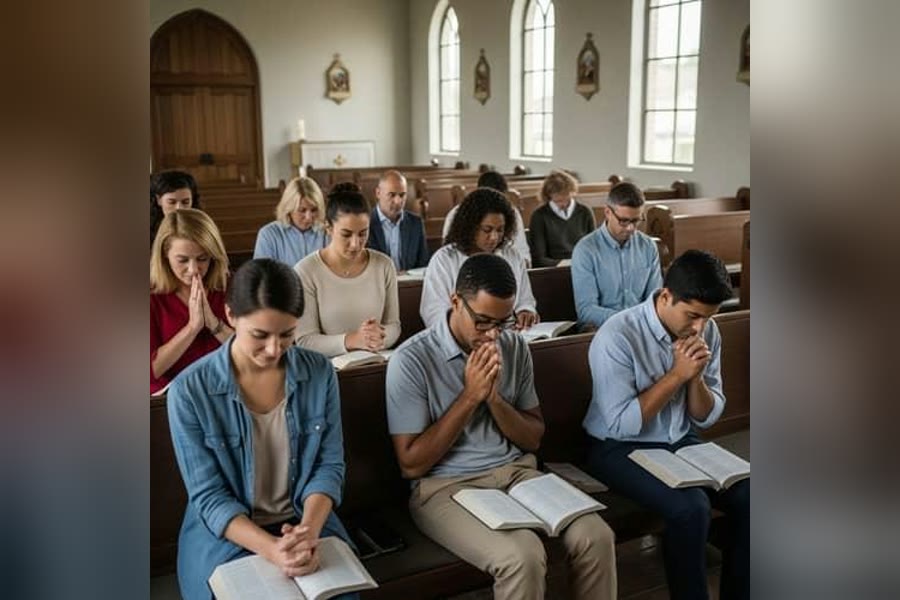
A pastor in Ohio gets an email from a church in Guatemala. They’ve been playing his sermons on Sunday nights for months, with a bilingual deacon translating live. He’s delighted. Then someone sends him a recording, and he notices that every verse he quoted from the ESV came out as a word-for-word Spanish rendering of the English. Not one of them matched the Bible the congregation was holding.
Nobody did anything wrong, exactly. But it’s the first thing good Christian translators learn to watch for, and it’s the thing clients almost never ask about. Bible verses don’t get translated the way the rest of a sermon or book does. They get swapped out. And most of the real decisions happen in that swap.
Why Bible Verses Aren’t Translated From English
Say a book quotes John 3:16. A translator who doesn’t know better takes the English sentence and turns it into Portuguese. It might even be accurate. It’ll still sound like no Bible a Brazilian Christian has ever read.
Every major language has its own Bibles, and people get attached to them. A lot of Latin American churches still use the Reina-Valera 1960. Plenty of younger congregations have moved to the Nueva Versión Internacional, and a few will politely tell you they find the RVR1960 hard to follow. In German, it depends who you ask: Luther or Elberfelder. Russian believers grew up on the Synodal translation, and a verse worded any other way can land about as well as a paraphrased Lord’s Prayer at a funeral.
So the verse has to come from the published Bible in the target language. Simple rule. Messy in practice.
Which Bible Version Should Your Translation Use?
Honestly, the answer is usually “whichever one your readers own.” That means someone has to know who the readers are.
I’ve seen this play out with authors more than once. A devotional book is headed into Spanish. If it’s going mostly to older, traditional churches, RVR1960 is the safe call. If it’s for a university ministry or a young church plant, something more contemporary probably fits better. Either is fine. What isn’t fine is chapter three quoting one version and chapter seven another, which happens more than you’d think when a book gets split between translators and nobody sets the rule up front.
Then there are permissions. Modern Bible versions belong to publishers, and most cap how much you can quote before you need a license. Older ones have their own terms. Decent Christian book translation services raise this at the start. Finding out during typesetting is a miserable way to lose a month.
What Good Christian Translators Do When the Sermon and the Verse Don’t Match
This is the part of the job I find most interesting, and where projects quietly go wrong.
Picture a sermon series built around a single English word, say “steadfast.” The preacher keeps coming back to it. He slows down on it. The whole Sunday hangs on that word. Then the translator opens the target-language Bible and the verse uses something closer to “faithful.” Different shade of meaning, and now half the sermon is pointing at a word the listeners won’t hear.
You can’t change the verse. It’s Scripture. So what do you do?
It depends. Sometimes the fix is to rework the pastor’s commentary so it points at the word that’s actually there. Sometimes a short note about the Hebrew does the job. Once in a while it makes sense to quote a second, more literal version for that one verse and say plainly that you’re doing it. The one thing you don’t do is bend the verse to fit the sermon. Christian translation services that do that won’t get caught by everyone, but they’ll get caught by the readers who know their Bibles best, and those are the readers whose trust you can’t afford to lose.
Idioms cause a smaller version of the same headache. “Born again” works in some languages and sounds faintly clinical in others. The verse stays as the target Bible has it. The pastor’s offhand mentions of “born-again folks” elsewhere might need whatever phrase local churches actually use.
Overdub, Podcasts, and ASL Bring Their Own Problems
On video it gets trickier. In a Christian overdub, the voice actor reads the verse from the local Bible, and it might run quite a bit longer than the English. If the speaker’s face is on screen, the timing has to be rebuilt around that, and nobody gets to shorten Scripture to make the lips line up. Podcast translation skips the lip-sync problem, but a listener who’s known Psalm 23 since childhood will notice the second it sounds wrong. For a wider look at how technology is changing video work, see our piece on conversational AI in video editing.
ASL is its own world. A Deaf viewer isn’t reading an English Bible, so captioning the NIV doesn’t really serve someone whose first language is ASL. An ASL video interpreter signs the meaning of the passage in a language with its own grammar, and has to decide in real time how closely to follow the English wording the pastor is quoting. It’s skilled work and it isn’t fast.
What It Costs, and When You Can Skip It
Doing all this properly takes longer and costs more. Someone has to check every reference against the chosen version, sort out permissions, and argue gently with a sermon about a word.
Not every project needs that. An internal note to volunteers doesn’t, and neither does a rough draft to see whether a partner church is even interested. For jobs like those, a cheaper process is fine. Christian Lingua, for one, offers machine-assisted options with human review for tight budgets.
But for anything heavy with Scripture, I’ll say it plainly: machine translation on its own isn’t good enough. It’ll cheerfully re-translate an English verse instead of finding the published one, and it’ll do it so fluently you won’t notice until a reader does. Usually in chapter one.
If you’re getting ready to translate materials for your church, a training program, or a radio audience, decide on the Bible version before anything else, and write it down. Then look for Christian translators who ask about it before you do. If you’d like to talk through your project, visit the Christian Lingua website and start the conversation there, with who your readers are and which Bible they’re holding.