
Reduce Setups for Complex Parts With Multi-Axis CNC Machining

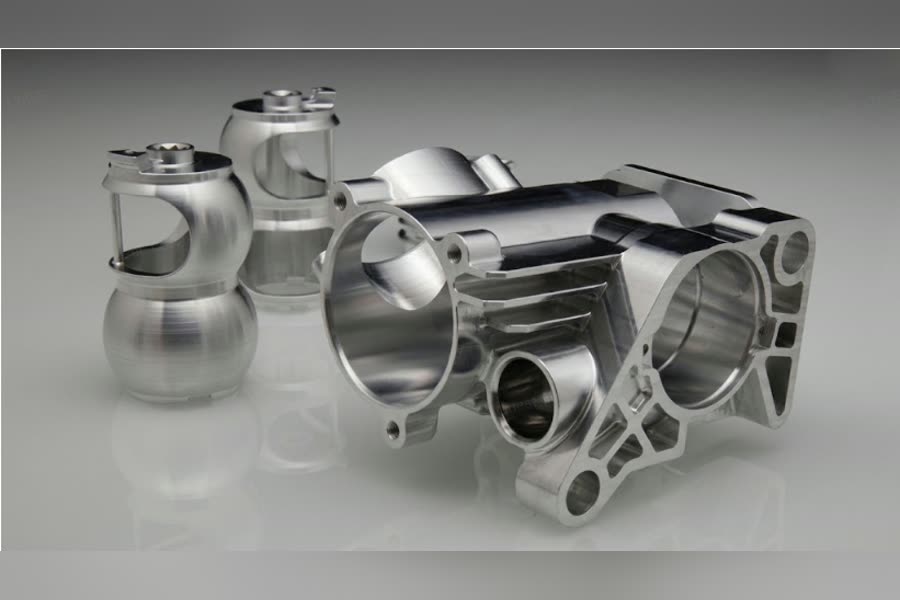
The production of complex parts frequently requires a lot of surface machining, angled structures, deep pockets, and precision holes. Multiple repositioning, extra fixtures, and separate operations may be needed to achieve these geometries using conventional machining methods. Every repositioning has the potential to create alignment errors and add to production time. Multi-axis CNC machining overcomes these challenges by enabling cutting tools and workpieces to move in various directions, thereby minimizing unnecessary setups and ensuring dimensional accuracy in complex parts.
Understanding Setup Reduction in Complex CNC Machining
Machining setup is the process of locating and clamping a workpiece in some desired position prior to cutting. Typically, conventional three-axis milling will work around a part in three linear directions, and when a part has features on several different faces, more positioning is required. Operators must release, rotate, realign, and secure the component at each repositioning before moving on to the next machining step.
These repeated operations add to the handling time and open up the possibility for positioning errors. Multi-axis machining minimises these interruptions by offering extra rotational movement when cutting. Depending on the machine configuration, several surfaces and angled features can be accessed without removing the component from its original fixture. This method eliminates manufacturing sequences and allows for more predictable dimensional relationships between related features.
How Multi-Axis Movement Simplifies Complex Part Manufacturing
Multi-axis CNC machines are machines that can be equipped with rotational axes in addition to linear movements in order to reach hard-to-reach geometries. A four-axis machine will add one more axis of rotation, and a five-axis machine will add two more axes of rotation as well as three axes of linear movement. The movements enable cutting tools to reach various surfaces without having to be manually repositioned repeatedly.
In projects that need CNC machining services for low-volume production, minimizing setups can enhance manufacturing efficiency without the need for costly specialized tooling. Fewer interruptions between operations can be useful for complex housings, angled brackets, turbine-related components, and precision fixtures. 3ERP can offer 3-, 4-, and 5-axis CNC milling services for a wide variety of parts in metal and plastic with tolerances down to ±0.01 mm, depending on geometry and specification.
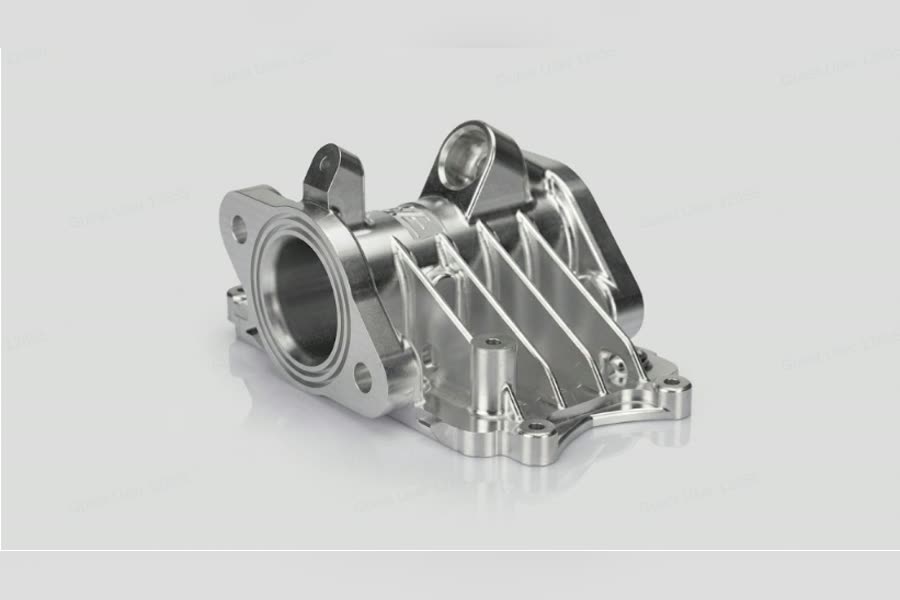
Key Advantages of Reducing Machining Setups
Reducing the number of setups influences several aspects of manufacturing beyond machining time. Fewer interruptions create a more streamlined production sequence and simplify dimensional control.
The main advantages include:
- Improved positional accuracy: Maintaining the original workpiece position reduces cumulative alignment errors between machining operations.
- Shorter production cycles: Fewer fixture changes and manual adjustments reduce non-cutting time during manufacturing.
- Better surface continuity: Machining connected surfaces within fewer setups can improve consistency across intersecting features.
- Simplified workholding: Complex components may require fewer specialized fixtures when additional machine axes provide access.
- Greater geometric flexibility: Angled holes, contoured surfaces, and multiple-sided features become easier to approach.
- Reduced handling requirements: Fewer manual interventions decrease the possibility of accidental damage or positioning inconsistencies.
These advantages are particularly relevant when components combine several precision features within limited dimensions.
Selecting Between Four-Axis and Five-Axis Machining
The selection of the machine configuration depends on the number, orientation, and accessibility of component features. Four-axis machining is ideal for part features that need to be continuously rotated around a single axis. This is useful for cylindrical housings, indexed drilling patterns, and other components that have features arranged around their circumference.
Five-axis machining adds rotational motion to enable tools to reach surfaces from various angles. This function is helpful for sculpted parts, for angled cavities, and for complex contours and geometries where multiple surfaces must be moved simultaneously. But extra axes do not necessarily eliminate all setups. Some workholding arrangements, deep internal cavities, and inaccessible undercuts may still need separate operations. The selection of the proper machine is based on the complete geometry as well as the sequence of the machining processes.
Design Considerations That Help Minimize Setups
This is because good setup reduction starts at the component design stage and not after the start of the machining process. Engineers need to consider both the way that cutting tools approach individual features and how the workpiece can be held securely in place during machining.
There are a number of design considerations that can enhance accessibility and manufacturing efficiency. Replace repositioning needs by grouping features on surfaces that are accessible. Standardization of hole diameters and thread specifications also makes it easier to choose tools and to plan the operations. Internal corner radii should be designed for available cutting tools, and too-deep cavities may cause tool deflection and vibration.
Wall thickness, undercuts, clamping surfaces, and necessary tolerances should also be considered by designers. Design for Manufacturability Review can be used to determine features that might not need extra operations. Geometries, accessibility of tooling, material used, and setup requirements are all taken into account during engineering reviews at 3ERP prior to production.
The Role of Toolpaths, Fixtures, and Machining Strategies
Flexibility is added by additional machine axes, but the results are efficient only if you program and workhold correctly. CAM software converts CAD geometry to toolpaths that dictate cutting motion, tool orientation, and cutting sequences. Appropriate simulation can be used to detect possible collisions between cutting tools, fixtures and machine elements prior to machining.
Fixtures should also be sufficiently rigid and have access to critical surfaces. Poor clamping can lead to vibrations, deformations, or limited tool movement. The choice of cutting tools, spindle speed, and the management of chip removal also affect the performance of the machining process. When these are coordinated, multi-axis equipment can perform multiple operations in a single secure workholding.
Maintaining Precision Across Multiple Machining Operations
Although reducing setups can help to improve consistency, dimensional accuracy relies on machine calibration, material behavior, cutting conditions, and inspection procedures. Final dimensions may be affected by heat generation, material stresses left over from the manufacturing process, and tool wear, especially in thin-walled or complex parts.
Therefore, all critical dimensions must be covered during production by quality control. Dimensional requirements can be verified through the use of coordinate measuring machines (CMMs), precision measurement instruments, and first-article inspection reports. ISO 9001:2015 certified manufacturing systems have documented quality procedures and traceability throughout the manufacturing process. 3ERP employs state-of-the-art inspection tools such as Hexagon CMMs to evaluate the machined parts against the engineering specifications. Inspection documentation and material certifications may also contribute to verification, depending on the project requirements.
Material choice matters just as much as machine choice, so it also helps to read our practical guide to steel grade selection for fabrication before you finalize a design.
Conclusion
When it comes to complicated parts with complex shapes, it is an effective way to reduce unnecessary setup by adopting multi-axis CNC machining. These machines incorporate both rotational and linear motion, making it easier to access surfaces, minimizing manual re-positioning, and preserving links between related features. But for successful implementation, the correct machine needs to be chosen, the components need careful design, secure jigging, and tool paths need to be carefully planned.
In the case of complex prototypes or production parts, setup reduction can help to shorten manufacturing cycles and ensure more dimensional consistency. 3ERP can meet a variety of machining needs with its multi-axis milling, turning, precision inspection, and over 100 materials of metal and plastic. By incorporating appropriate machining techniques at the design phase, it is possible to develop effective manufacturing processes that ensure both accuracy and efficiency in the production of engineering components.